
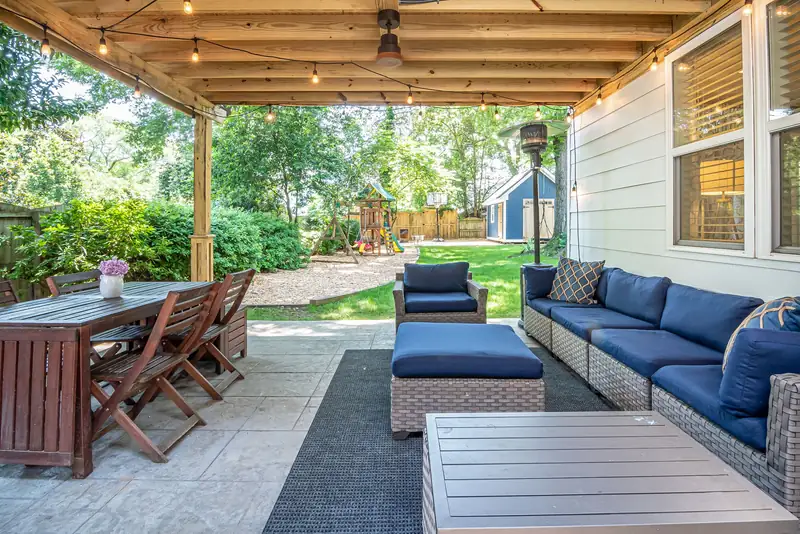
Concrete Patios · Lake Mary, FL
Building a Concrete Patio in Lake Mary
A concrete patio in Lake Mary falls between $6–$13 per sq ft installed as of October 2026. With the typical home here dating to 1997 and the city largely built out since, original backyard slabs from that late-1990s wave of construction are common enough that a resurfacing decision comes up almost as often as a new pour.
By the Opera Concrete & Pavers estimating team · Updated October 1, 2026
Get a free estimate
Tell us about the project and we'll call to set up a free site visit.
A city that stopped expanding leaves a lot of same-era concrete behind
Lake Mary's population has barely moved in five years, 16,789 counted in 2025 against a 2020 base of 16,833 (Census Bureau, Vintage 2025 population estimates), a pattern that lines up with a median home build year of 1997 (Census Reporter, Lake Mary FL). That combination means most of the city's original backyard patios share roughly the same age, nearly three decades of Florida heat, rain and UV exposure, rather than a mix of brand-new and original slabs the way a still-growing city would show.
Flatwoods ground shapes the grading before the forms go in
Myakka fine sand, the series that covers most of Seminole County including Lake Mary, drains slowly enough that standing water after a storm is more a function of the native soil than poor workmanship (Florida Dept. of State, State Soil). Skipping that reality when a patio is pitched leaves water pooling against the slab instead of running toward a swale or low corner of the yard, which is why a crew walks the lot with a level before deciding the finished grade rather than copying the pitch of a neighboring driveway.
Footers for a Lanai Go in Before the Patio Slab
A lanai or screen enclosure attached to a new patio needs its own footings for the support posts, sized and poured as a separate structural element from the flatwork around them. Several Lake Mary-area permit categories draw exactly that line: a plain patio slab without footers often clears a lighter review than a slab with footers, because adding footings changes what the job is in the eyes of the permitting office. Practically, that means the footer holes get excavated, formed and poured before the surrounding patio base goes in, not worked in afterward around a finished slab. Treating the footers as an afterthought is how a screen enclosure crew shows up to a patio that isn't ready for posts.
Starting Early When the House Itself Blocks the Morning Shade
A patio built close to the back of a Lake Mary house often sits in the house's own shadow through mid-morning, which shifts the riskiest window for a hot pour later in the day than it would be on an open driveway facing the street. Hot-weather guidance still calls for avoiding the hottest stretch of the day and starting early enough that finishing and the first hours of curing happen before heat and evaporation peak, but starting early on a shaded patio sometimes means watching the sun angle as much as the clock. Reading the site's actual shade pattern, not just a generic start time, is part of planning the pour day.
Replacing a patio that matches the city's building-era average
Picture a home built close to Lake Mary's 1997 median adding a 260 sq ft patio extension off an existing lanai, replacing a bare strip of compacted yard. At $6–$13 per sq ft installed, the job runs somewhere between $1,560 and $3,380 before any decorative finish is added. Because the extension is new impervious surface, it feeds into the ISR figure tied to that lot's Future Land Use designation, and the grading gets checked against the yard's existing drainage pattern before the forms go in.
A Lanai's Footers Aren't Sized Like the Slab Around Them
A screen enclosure's support posts need footings sized for that structure, not for the patio slab around them, and several Lake Mary-area permitting offices draw a formal line between a plain slab and a slab with footers for exactly that reason. The footer's depth and width come from what the enclosure manufacturer or an engineer specifies for the posts, independent of the 4-inch flatwork thickness used for the rest of the patio. Pouring the footers as their own element, rather than trying to build extra thickness into the surrounding slab and call it enough, is what lets the posts carry wind and structural loads the slab itself was never designed to take.
A Fenced Backyard Changes How a Hot Pour Dries
A fenced backyard or a patio boxed in by a pool cage and tall landscaping can trap heat and cut the wind that would normally help a hot pour evaporate at a predictable rate, which changes the plastic-shrinkage math a Lake Mary crew plans around compared with an open, wind-exposed driveway. Less wind can lower the evaporation rate, which sounds like an advantage, but a boxed-in yard also traps radiant heat from fences and walls, so the net effect on a given lot is not automatic either way. Reading the actual microclimate of a specific backyard, rather than applying the same hot-weather plan used on every job, is what keeps a shaded or enclosed pour from surprising the crew.
Checking Where the Downspout Actually Lands Today
A downspout that was aimed fine when the landscaping was last redone can drift or get knocked out of position over the years, and checking where it actually discharges today, not where it was pointed when the Lake Mary patio was poured, is worth doing at least once a year. A head draining straight onto a compacted patio edge wets that same strip of base every time it rains, which works against the base the same way standing water from poor grading would, just more predictably and over a longer stretch of time. Redirecting a drifted downspout costs almost nothing and protects years of base work that is otherwise sound.
Frequently asked questions
Is a 1990s Lake Mary patio more likely to need replacement than repair?
Often, yes. With the typical home dating to 1997 and the city largely built out since, a meaningful share of original backyard slabs are old enough that resurfacing or a full tear-out comes up more than a simple patch.
Does a concrete patio addition affect Lake Mary's impervious surface limit?
Yes, if it adds new surface beyond what already exists, since the added square footage counts toward whatever ISR ceiling applies to that lot's Future Land Use designation.
Why does Lake Mary's soil matter for patio drainage?
Myakka fine sand, the series under most of the city, drains slowly enough that a patio's pitch does more work keeping water off the slab than the concrete mix itself does (Florida Dept. of State, State Soil).
Sources
- Census Bureau PEP, City and Town Population Totals, Vintage 2025 (July 1, 2025)
- Seminole County — Residential Driveway Construction Application
- Seminole County — New State Legislation Affecting Permits
- SJRWMD Watering Restrictions
- Florida Dept. of State - State Soil
- Florida Administrative Code — Rule 62-308.100, Synthetic Turf (effective May 19, 2026)
- Florida Statutes §125.572 — synthetic turf on single-family lots
- Census Reporter, Lake Mary FL (ACS 2020-2024 5-yr, B01003/B25035)
- Wikipedia, Lake Mary, Florida
- Wikipedia, Heathrow, Florida
- City of Lake Mary, Building Division
- City of Lake Mary, Permit Exemption (HB 803)
- City of Lake Mary, Application Fee Schedule
- City of Lake Mary, FAQ: What is the impervious surface ratio (ISR)?
- City of Lake Mary, Planning & Zoning FAQs
- City of Lake Mary Code of Ordinances §157.12, Arbor Permit Required
- Seminole County Water Atlas, Learn More: Soils
Ready for a price on your project?
Request a free estimate
Tell us about the project and we'll call to set up a free site visit.