
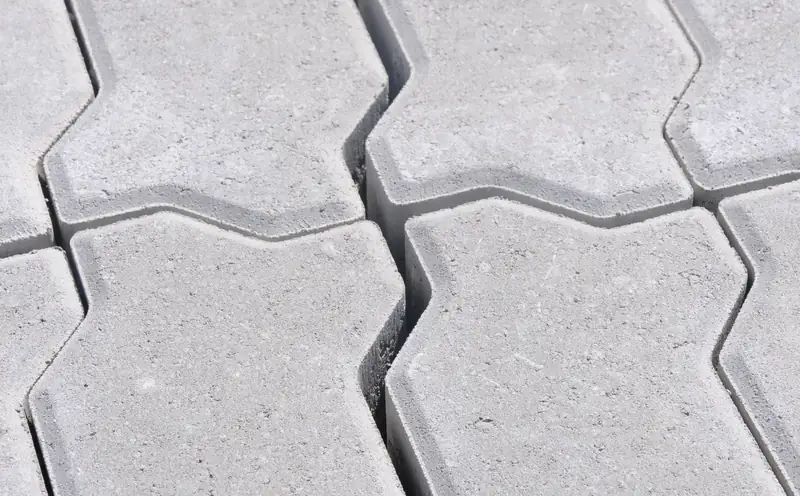
Pool Deck Pavers · Lake Mary, FL
Pool Deck Pavers and Lake Mary's Arbor Permit
Pool deck pavers in Lake Mary fall in the $12–$30 per sq ft installed range as of October 2026, whether laid fresh or over an existing slab. A pool deck large enough to require removing a mature tree brings the city's arbor permit into the project alongside the Site Construction Permit covering the pavers themselves.
By the Opera Concrete & Pavers estimating team · Updated October 1, 2026
Get a free estimate
Tell us about the project and we'll call to set up a free site visit.
Clearing a tree to fit a paver deck
Picture a backyard pool project where a 580 sq ft paver deck layout requires removing one 20-foot oak that sits directly where the screen enclosure needs to go. The arbor permit for that single tree costs $30, filed separately from the deck's own Site Construction Permit. Pricing the deck at $12–$30 per sq ft installed runs from roughly $6,960 for a standard concrete paver up to $17,400 if travertine is chosen instead, with the tree removal and its permit handled as a distinct line item before the base goes in.
A tree over 15 feet needs its own permit before it comes down
Lake Mary's landscaping and arbor code requires a permit before cutting down, removing or moving a living tree taller than 15 feet anywhere in the city, with a $30 fee for a residential arbor permit (City of Lake Mary Code of Ordinances §157.12, Arbor Permit Required; City of Lake Mary, Application Fee Schedule). A pool deck footprint that calls for clearing a tree to make room runs that arbor application alongside the Site Construction Permit covering the deck itself, since the two are reviewed as separate steps.
The Coping Joint Needs a Sealant, Not Just Sand
Where the field pavers meet mortar-set coping at the pool's edge, a standard sand joint isn't the right detail, since the two systems move independently and a rigid mortar line right there cracks the same way a concrete deck would without an isolation joint. We detail that transition with a flexible sealant over a backer rod instead, the same approach a poured concrete deck uses at its own coping line. On a Lake Mary paver deck, butting sand-set pavers straight against mortar-set coping without that flexible joint is one of the more common reasons the first paver course against the pool starts rocking within a year or two.
The paver deck permit tracks the same percentage fee as every other site job
Whether the deck is a first installation or an overlay set over an existing slab, it goes through the same Site Construction Permit at 1.25 percent of the contract price, $250 minimum (City of Lake Mary, Application Fee Schedule). A poured pool deck on the same lot files on that identical fee basis, so the choice between a paver surface and plain concrete doesn't change the permit cost itself.
Where the Screen Cage Footer Lands in a Paver Field
A screen enclosure's aluminum posts typically sit on isolated concrete footers poured below the compacted base, the same as they would on a paver patio, but the stakes are higher around a pool since the posts often sit close to the coping line. We lay out footer locations before compacting the surrounding base and leave the paver courses free to be lifted and reset around them without disturbing the footer itself. On a Lake Mary job, coordinating that layout with the screen contractor ahead of the paver install avoids cutting a finished base to make room for a footer nobody planned for.
Saltwater Pools Leave Salt Behind on the Coping and Nearby Pavers
A saltwater pool runs at a far lower concentration than seawater, but splash-out and backwash still carry that salt onto the coping and the few feet of paver field closest to the water, and it stays behind as a dull white residue once the water evaporates. It looks similar to ordinary efflorescence on new concrete pavers but comes from the pool itself rather than from the paver material curing, and it keeps recurring on a schedule tied to pool use rather than fading out over a season. On a Lake Mary deck, the coping and splash zone need a routine rinse the rest of the field doesn't.
Laying Field Pavers From the Coping Outward
Once the base is compacted and bedding sand is screeded, we typically start the field pattern at the fixed coping line and work outward toward the perimeter restraint, since the coping's curve is the one edge in the layout that can't be adjusted after the fact. Border and cut pieces get set last at the outer edge, where small adjustments in cut width are easier to absorb than they would be right against the pool. On a Lake Mary deck of average size, this stage usually runs a full day or two, depending on how much cutting the coping curve and any deck drains require.
Re-Sanding Joints Near a Pool Needs a Shorter Interval
Joint sand anywhere in a paver field wears thin from rain and foot traffic over time, but the rows closest to a pool lose sand faster still, since splash-out and pool-service hose-downs wash sand out of those joints on top of normal weathering. Topping off and compacting joint sand in that zone on a shorter cycle than the rest of a Lake Mary deck, rather than waiting for the whole field to need it at once, keeps the pavers nearest the water from rocking before the rest of the deck shows any sign of wear at all.
Frequently asked questions
Does removing a tree for a Lake Mary pool deck need its own permit?
Yes, if the tree is taller than 15 feet, the city's arbor code requires a permit before it's cut down, removed or moved, with a $30 fee for a residential property (City of Lake Mary Code of Ordinances §157.12).
Is the arbor permit separate from the pool deck's building permit in Lake Mary?
Yes, the two are filed and reviewed as distinct applications, the arbor permit covering the tree and the Site Construction Permit covering the deck itself.
Does a paver pool deck cost more to permit than a poured concrete one in Lake Mary?
No. Both fall under the same 1.25 percent Site Construction Permit fee, so the review cost tracks the contract value rather than the surface material.
Sources
- Census Bureau PEP, City and Town Population Totals, Vintage 2025 (July 1, 2025)
- Seminole County — Residential Driveway Construction Application
- Seminole County — New State Legislation Affecting Permits
- SJRWMD Watering Restrictions
- Florida Dept. of State - State Soil
- Florida Administrative Code — Rule 62-308.100, Synthetic Turf (effective May 19, 2026)
- Florida Statutes §125.572 — synthetic turf on single-family lots
- Census Reporter, Lake Mary FL (ACS 2020-2024 5-yr, B01003/B25035)
- Wikipedia, Lake Mary, Florida
- Wikipedia, Heathrow, Florida
- City of Lake Mary, Building Division
- City of Lake Mary, Permit Exemption (HB 803)
- City of Lake Mary, Application Fee Schedule
- City of Lake Mary, FAQ: What is the impervious surface ratio (ISR)?
- City of Lake Mary, Planning & Zoning FAQs
- City of Lake Mary Code of Ordinances §157.12, Arbor Permit Required
- Seminole County Water Atlas, Learn More: Soils
Ready for a price on your project?
Request a free estimate
Tell us about the project and we'll call to set up a free site visit.