
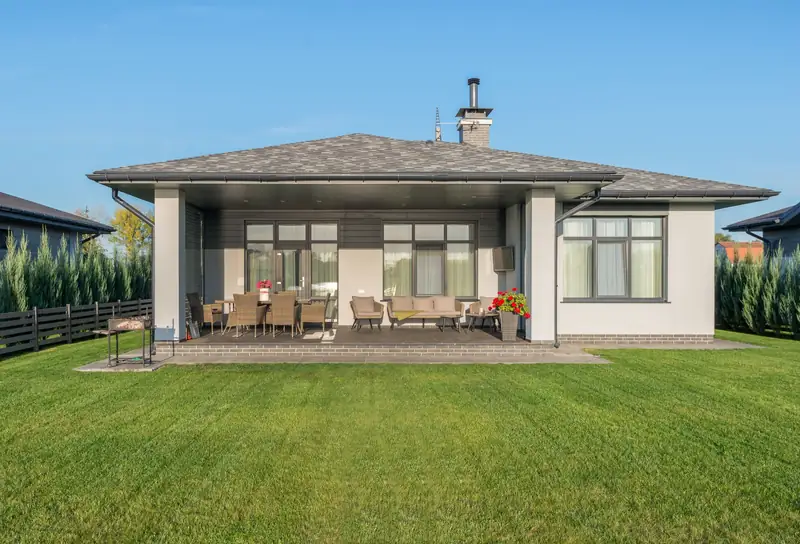
Concrete Patios · Altamonte Springs, FL
Building a Concrete Patio in Altamonte Springs
A concrete patio in Altamonte Springs falls between $6–$13 per sq ft installed as of October 2026. Unlike a driveway, a patio goes through the city's general Building Permit Application, which asks for a drainage plan on any job that adds impervious area and, in a deed-restricted neighborhood, a signed HOA approval letter.
By the Opera Concrete & Pavers estimating team · Updated October 1, 2026
Get a free estimate
Tell us about the project and we'll call to set up a free site visit.
A side-yard patio addition, checked against the drainage-plan trigger
A homeowner is pouring a 260 sq ft patio along the side of the house, in a neighborhood governed by an HOA, where the yard currently sheets water toward the back fence line. Pricing that at $6–$13 per sq ft installed runs roughly $1,560 to $3,380 before any decorative finish is added. Because the new slab adds impervious area, a drainage plan showing the existing and proposed flow accompanies the building permit application, and the signed HOA approval letter has to be on file before the city will move the application forward.
A patio triggers the general checklist, not the driveway form
The Building Permit Application Checklist lists “Location and Size of Porches, Patios, Steps, Driveways, Sidewalks, etc.” as a required item on the site plan, alongside lot coverage calculations for single-family and duplex properties (City of Altamonte Springs, Building Permit Application and Checklist). That's a different track from the driveway-specific form covered on the concrete driveway page for this city, even though both ultimately run through the same Building and Fire Safety Department.
Broom, Exposed Aggregate or Stain: Decide Before the Truck Arrives
A broom finish is the standard surface for a Altamonte Springs patio: dragging a broom across the concrete while it is still workable leaves a texture that sheds water and resists slipping around a pool or outdoor kitchen. Exposed aggregate washes or blasts the surface cement away so the stone in the mix shows through, changing the look and the grip underfoot, while an integral color or acid stain changes the surface's appearance without changing the mix's strength. All three choices have to be locked in before the pour starts, since a plain broom finish cannot become exposed aggregate or a stained surface afterward without resurfacing the whole patio.
Adding paved surface pulls in a drainage plan and an association letter
“For all projects involving the addition of impervious area or affecting lot drainage,” the checklist requires a drainage plan showing existing and proposed drainage patterns along with the proposed finished floor elevation (City of Altamonte Springs, Building Permit Application and Checklist). The same checklist also calls for a Homeowner Association or Condominium Association approval letter before the city processes the permit, which matters on any lot inside a deed-restricted subdivision.
Footers for a Lanai Go in Before the Patio Slab
A lanai or screen enclosure attached to a new patio needs its own footings for the support posts, sized and poured as a separate structural element from the flatwork around them. Several Altamonte Springs-area permit categories draw exactly that line: a plain patio slab without footers often clears a lighter review than a slab with footers, because adding footings changes what the job is in the eyes of the permitting office. Practically, that means the footer holes get excavated, formed and poured before the surrounding patio base goes in, not worked in afterward around a finished slab. Treating the footers as an afterthought is how a screen enclosure crew shows up to a patio that isn't ready for posts.
Adding a Lanai Can Bump a Patio Into a Different Permit
A homeowner who has heard that Altamonte Springs allows an on-grade patio without a building permit can be caught off guard when adding a lanai or screen enclosure later, since the footings for that structure often push the same patio into a different permit category entirely. What looked like simple flatwork now needs a footer inspection and a formal submission, and starting the posts' footings before anyone checks which category applies is how a backyard project ends up with a stop-work order partway through. Confirming the permit path before footers go in the ground, not after, is the difference between a short delay and tearing out concrete that has already cured.
Curing Has to Wait on the Finish You Picked
Curing a patio that is going to be stained or colored cannot follow the same fixed schedule as a plain gray slab, because some stains and sealers need the surface moisture content and cure time further along than a basic curing compound requires before they will take evenly. On a Altamonte Springs job, that means the finish decision made back at the planning stage, broom, exposed aggregate, color, feeds directly into how the crew schedules curing and when the next trade is allowed back on the slab. Rushing a stained finish onto a patio that has not cured long enough is a common way to end up with blotchy, uneven color instead of the look that was ordered.
Timing New Landscaping Around a New Patio's Watering Exemption
New landscaping planted around a freshly poured Altamonte Springs patio usually qualifies for a temporary watering exemption, daily for the first 30 days and then every other day for the next 30 under the Orlando-area rules, or a similar new-plant schedule under the Sarasota side's current restrictions, rather than the standard once- or twice-a-week limits that apply to established beds. Timing new sod or shrubs around the patio to go in right after the pour, while that exemption window is open, gets new plants established without the irrigation overspray that a fully restricted schedule can leave on fresh concrete edges. Checking which district's rules apply to a specific address is worth doing before the planting date, not after.
Frequently asked questions
Does a concrete patio in Altamonte Springs need a drainage plan?
Yes, if the project adds impervious area or affects how the lot drains, the building-permit checklist requires a plan showing both the existing and proposed drainage patterns.
Does Altamonte Springs require HOA sign-off before approving a patio permit?
The building-permit checklist lists a Homeowner Association or Condominium Association approval letter as a required item, which applies on a lot inside a deed-restricted community.
Is a patio reviewed under the same form as a driveway in Altamonte Springs?
No. A patio goes through the general Building Permit Application; a driveway uses its own dedicated Driveway Construction Permit Application.
Sources
- Census Bureau PEP, City and Town Population Totals, Vintage 2025 (July 1, 2025)
- SJRWMD Watering Restrictions
- Florida Dept. of State - State Soil
- Florida Administrative Code — Rule 62-308.100, Synthetic Turf (effective May 19, 2026)
- Florida Statutes §125.572 — synthetic turf on single-family lots
- City of Altamonte Springs, Driveway Construction Permit Application (rev. 3/1/2024)
- City of Altamonte Springs, Building Permit Application and Checklist (rev. 3/1/2024)
- City of Altamonte Springs Land Development Code §3.7.8, R-1 Lot Coverage (via Zoneomics)
- City of Altamonte Springs, Future Land Use Element, Data Inventory and Analysis, City Plan 2030
- City of Altamonte Springs, Project APRICOT
- Wikipedia, Altamonte Springs, Florida
- Census Reporter, Altamonte Springs, FL (ACS 2024 5-yr, B25035)
Ready for a price on your project?
Request a free estimate
Tell us about the project and we'll call to set up a free site visit.