
Paver Patio Ideas for Florida Backyards and Lanais
Paver patio ideas for Greater Orlando and Sarasota–Manatee backyards range from a 12 by 12 foot seating pad around $1,400 to $2,500 to a full lanai-width patio with a fire pit or pergola, installed at $10 to $17 per square foot as of October 2026. Shape, border and color blend change the look without changing the compacted base every paver patio needs.
By the Opera Concrete & Pavers estimating team · Updated October 1, 2026
What Shapes and Layouts Work Well for a Florida Paver Patio?
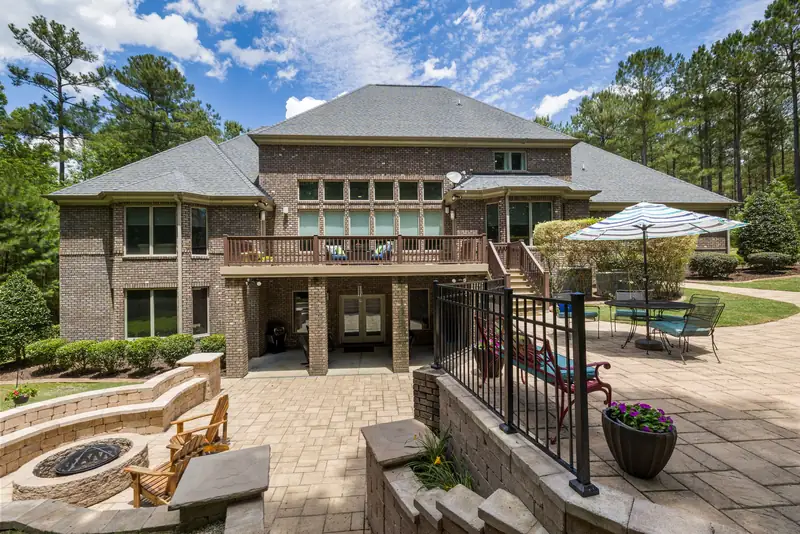
A rectangular or L-shaped field laid in a running bond or herringbone pattern is still the most common paver patio layout in Central Florida and the Suncoast, mainly because it uses the fewest cuts and ties cleanly into a square back porch or lanai opening. A curved or kidney-shaped patio costs more in labor for the cuts along its border, but it reads less boxy against a pool, a planting bed or a lot that is not itself square. HomeGuide prices an installed paver patio at $10–$17 per sq ft installed (src homeguide-paver-patio), with a curved layout landing toward the higher end of that range for the added labor.
What Are Good Small Paver Patio Ideas for a Tight Backyard?
A small paver patio, often a 10 by 10 or 12 by 12 foot pad tucked off a back door or a side-yard gate, works best with a single paver size and a simple running-bond or basket-weave pattern rather than a busy mixed layout that reads cluttered at that scale. HomeGuide puts a 12 by 12 foot patio at roughly $1,400 to $2,500 installed (src homeguide-paver-patio), with materials running $2 to $4 per square foot before labor. A single step down from the patio into the lawn, rather than a retaining edge, keeps a small footprint from feeling boxed in.
A narrow side yard benefits from the same small-footprint thinking: a 3 to 4 foot paver path that widens into a small seating pad at one end reads as a destination rather than just a passage. Our guide to side yard ideas goes further into turf, paver and gravel options for that kind of narrow space.
How Do You Design a Paver Patio for a Screened Lanai?
A lanai patio generally lays flush with the house's existing slab, with the paver field running the full width of the screen enclosure rather than stopping short at a visible seam. Where the enclosure already sits on an older concrete pad, pavers can usually go down as an overlay rather than a tear-out, which keeps the framing and screen track undisturbed. Our guide to extending a patio under a screen enclosure covers the height, drainage and framing details that matter most once the enclosure itself is part of the plan.
Inside a screened lanai, pool deck pavers and standard patio pavers can usually share one continuous field and pattern, worth planning together rather than ordering the pool deck and the surrounding lanai floor as two separate paver jobs.
What Pairs Well With a Paver Patio: Pergola, Fire Pit or Outdoor Kitchen?
A pergola needs its posts set on footings poured before or during the paver base work, not added afterward, since cutting a footing into a finished paver field means pulling pavers back up around each post. A wood-burning or gas fire pit sits on its own non-combustible pad, often a ring of pavers set at grade or a low wall built from retaining-wall block; our guide to fire pits on pavers covers clearance and setback rules in more depth than fits here.
An outdoor kitchen pad is worth planning for even if it is not part of the first phase, since plumbing, gas and electrical rough-in is far cheaper to run under an unfinished base than to trench through a paver field that is already down. Our guide to budgeting a backyard project in phases covers that kind of staged planning.
What Paver Colors and Patterns Work in a Florida Backyard?
A blended run of two or three tan or gray shades, mixed randomly across the field rather than laid in solid bands, hides everyday leaf litter, pollen and light staining better than a single solid color does, the same reason blended runs show up on paver driveways too. A contrasting soldier-course border around the patio's outer edge is the simplest way to frame the space without taking on a second full pattern across the field.
Travertine and shell-stone pavers read lighter and cooler-toned than standard concrete pavers and work well tying a patio into a pool deck built in the same material; our travertine vs. concrete pavers comparison covers that choice directly. Our guide to the best pavers for Florida homes compares concrete, clay, travertine, porcelain and shell stone in one place.
Paver Patio Layout Options Compared
| Layout | Fits | Note |
|---|---|---|
| Straight rectangle or L-shape | Square back porches, budget-minded jobs | Fewest cuts, lowest labor cost |
| Curved or kidney-shaped | Irregular lots, poolside patios | More labor for border cuts |
| Small pad (10x10 to 12x12) | Tight backyards, side-yard seating | One paver size, simple pattern reads cleanest |
| Lanai overlay | Existing screen enclosures | Can often go over an old concrete pad |
Any layout uses the same compacted-base spec; the layout changes labor and material, not the base underneath.
Where Do Patio Design Choices Run Into HOA or Setback Rules?
A patio that extends close to a property line, a drainage easement or a conservation setback can run into rules that have nothing to do with choosing a paver pattern. Our guide to HOA approval for pavers and concrete covers what an architectural review committee typically asks to see before work starts, and our Sarasota County permit guide and our Manatee County permit guide cover what each county's building department requires for a patio specifically.
Our paver patio cost guide breaks pricing down by size and material once a layout is picked, and our stamped concrete vs. pavers comparison is worth reading if the choice is still between the two materials rather than the layout within one of them.
Frequently asked questions
Can a paver patio be curved instead of a straight rectangle?
Yes. A curved or kidney-shaped layout costs more in labor for the extra cuts at the border, but it works well against a pool or an irregular lot, and the base and compaction underneath stay the same regardless of the shape on top.
How small can a paver patio be and still feel finished?
A 10 by 10 foot pad with a single paver size and a simple pattern is enough to seat a small table and a couple of chairs comfortably. The common mistake on a small patio is mixing too many colors or paver sizes, which reads busier and smaller than the space actually is.
Should a fire pit sit directly on the paver field?
It can, on a non-combustible base built for the heat, but most fire pits work better on their own pad or ring set slightly apart from the main field, which keeps heat and soot away from the surrounding pavers and sealer.
Do paver colors fade differently than concrete over time?
Concrete pavers generally hold their integral color well since it runs through the full unit, not just a surface coat. What fades first in practice is usually a sealer's sheen rather than the paver's own color underneath.
Can a small patio be expanded later without redoing the whole thing?
Usually, as long as the original edge restraint is removed carefully and the new section's base is compacted to match the existing one. Matching the exact paver color years later can be harder if that production run is no longer available.