
Fire Pits on Pavers: Safe Setups for Florida Backyards
A fire pit on a Florida paver patio needs a denser, separately restrained base section and a setback from the house that depends on local rules: Orange County requires 25 feet unless the fire is contained in an outdoor fireplace, grill or barbecue pit, and Sarasota County allows a contained fire pit as close as about 10 feet, as of October 2026. A gas line needs a licensed plumbing or gas contractor; a portable propane unit does not.
By the Opera Concrete & Pavers estimating team · Updated October 1, 2026
What Does a Safe Fire Pit Setup on Pavers Look Like?
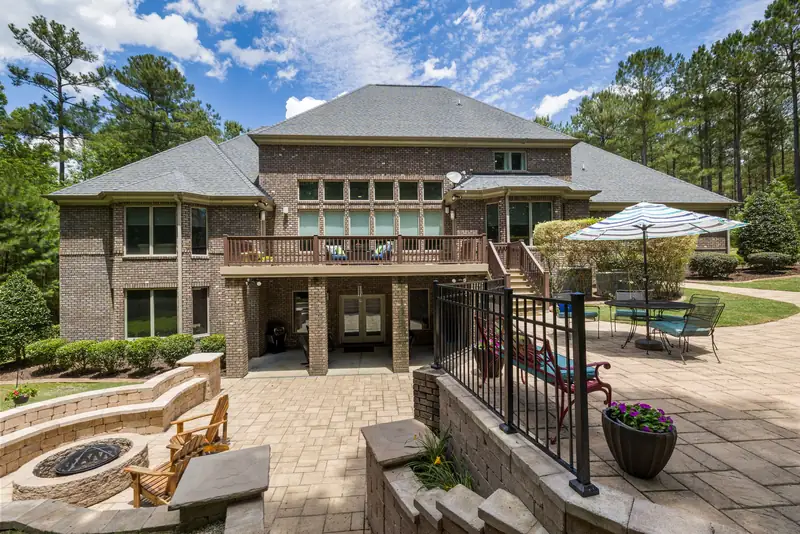
A fire pit built on a paver patio needs a non-combustible ring or insert set on its own denser base section, kept the setback distance local rules require from the house and any overhanging branches, and a clear, furniture-free radius around it for anyone standing up or stepping back from the heat. Orange County's open-burning rule, which governs Orlando and the rest of the county, caps an open fire at 3 feet across and 2 feet tall unless it burns inside a contained outdoor fireplace, grill or barbecue pit, which almost any manufactured or built-in fire pit insert qualifies as (Orange County, Open Burning FAQ). Sarasota County's rule reaches the same conclusion through a different route, defining a fire bowl, chiminea or built-in outdoor fireplace as a "warming type container" with its own shorter setback from a structure (Sarasota County Code §54-116, Open Burning).
How Far Does a Fire Pit Need to Sit From the House?
The distance depends on whether the fire counts as "contained" under the local rule, and the two counties in our service areas answer that question differently enough to be worth checking before a fire pit's location is final, not after the pavers are down.
| Jurisdiction | Open or uncontained fire | Contained fire pit, fire bowl or outdoor fireplace |
|---|---|---|
| Orange County | 25 ft from any building or combustible structure | Same 25 ft rule, but the 3 ft × 2 ft size cap does not apply once the fire is contained in an outdoor fireplace, grill or barbecue pit |
| Sarasota County | 25 ft from any structure or combustible material | A "warming type container," chiminea, fire bowl or built-in outdoor fireplace among them, needs only about 10 ft |
Orange County, Open Burning FAQ; Sarasota County Code §54-116. Manatee, Osceola, Lake, Seminole and Polk counties were not confirmed to the same level of detail; call the local fire marshal's office before finalizing a location close to the house.
Both counties also require the fire to be constantly attended by someone with a garden hose or another fire extinguishing tool within reach until it is fully out, and both give the local fire official authority to order any fire extinguished when drought conditions make it hazardous, which is the same trigger behind the burn bans issued most years during Florida's dry spring months.
What Base Does a Paver-Set Fire Pit Need?
The ring itself sits on a denser, more compacted section of base than the open paver field around it, since a masonry or steel insert concentrates weight in a tighter footprint and a wood or gas fire cycles that section through repeated heating and cooling that an open field never experiences. The edge restraint around the fire pit's own footprint is set separately from the restraint along the patio's outer perimeter, the same principle that applies anywhere a paver field changes material or purpose (ICPI Tech Spec 3). A built-in fire pit poured as a short masonry or block ring, rather than set as a freestanding metal bowl, is close kin to a low seat wall in how its base and footing are built, and the two are often designed together; our retaining wall and seat wall ideas guide covers seat wall height and layout.
Wood-Burning or Gas: What Changes About the Setup?
A wood-burning fire pit falls under the open-burning rules above regardless of what it is built from, since those rules track the fuel and the flame, not the material of the ring. A gas fire pit with a fixed line run from the house's natural gas or a buried propane tank is plumbing and gas work, not flatwork, and needs a licensed gas or plumbing contractor to make that connection and pull the gas permit, separate from whoever builds the pit's masonry or paver base. A portable propane fire table that runs off a swappable tank under the unit skips that gas-line permit step entirely, which is part of why portable units are the simpler choice on a patio where the exact final location is not locked in yet.
Does the Fire Pit Need to Sit on Its Own Pad, or Can It Share the Main Patio Field?
Both approaches work, and the choice is mostly about how much the fire pit area functions as its own destination versus an extension of the main seating field. A fire pit set into the main paver or concrete field, with seating pulled up around it, reads as one continuous space and suits a smaller yard where a second, separate pad would crowd the lot. A fire pit built on its own pad, often with a different paver pattern, a gravel surround or a low seat wall ringing it, reads as a distinct zone and works better where the main patio already has a dining or lounge layout that a fire feature would otherwise compete with for space.
What Does an HOA Typically Ask About a Fire Pit?
A fixed, built-in fire feature changes the yard's landscape plan and stays visible from neighboring lots year-round, which puts it on most architectural committees' submission list well before the first fire is lit. A portable propane fire table is less likely to need the same paperwork in most communities, since it reads as furniture rather than a permanent structure, though that line is set by the specific declaration, not a rule that holds everywhere. Our HOA approval guide walks through what a submission package for a permanent yard feature typically includes.
Frequently asked questions
How close to the house can a fire pit be built?
It depends on whether the local rule treats it as a contained fire. Orange County sets a 25-foot setback from any structure for an open fire, though the 3-by-2-foot size cap does not apply once the fire burns inside an outdoor fireplace, grill or barbecue pit. Sarasota County allows a contained fire pit, fire bowl or chiminea, termed a warming type container, to sit as close as about 10 feet. Other counties in our service areas were not confirmed to the same detail, so a call to the local fire marshal is worth it before the location is final.
Does a fire pit need a denser base than the rest of the patio?
Yes. A masonry or steel insert concentrates weight in a tighter footprint than an open paver field, and repeated heat cycling adds stress a plain seating area never sees, so that section gets its own compacted base and its own edge restraint, separate from the restraint around the patio's outer perimeter.
Does a gas fire pit need a permit?
A fixed line run from a natural gas supply or a buried propane tank is plumbing and gas work and needs a licensed gas or plumbing contractor to make the connection and pull the permit, separate from the masonry or paver work around it. A portable propane fire table that runs off a swappable tank under the unit skips that step.
Can a fire pit go on an existing paver patio, or does it need its own pad?
Either works. Setting it into the main field keeps the yard reading as one continuous space, which suits a smaller lot, while a separate pad with its own pattern or a seat wall around it reads as a distinct zone and works better where the main patio already has a full seating or dining layout.
Does an HOA need to approve a fire pit before it is built?
A permanent, built-in fire feature is the kind of improvement most architectural review committees want to see in advance, since it changes the landscape plan and is often visible from neighboring lots. A portable propane fire table is less likely to trigger the same review in most communities, but that depends on the specific declaration.