
How to Budget a Backyard Hardscape Project in Phases
Budgeting a backyard hardscape project in phases works best when structural work, a retaining wall or grading, goes first, a patio or walkway goes second, and turf goes last, since turf has no cure to protect and ties into finished edges easily. As of October 2026, each phase priced over $2,500 needs its own Notice of Commencement under Florida law.
By the Opera Concrete & Pavers estimating team · Updated October 1, 2026
How Do You Budget a Backyard Hardscape Project in Phases?
Phasing a backyard that will eventually include a retaining wall, a paver patio and turf works best when the structural and grading work goes first, the patio or walkway goes second, and turf or planting goes last, even if the whole project is spread across two or three budget cycles. Building in that order avoids the common mistake of finishing a patio early, then discovering a later retaining wall needs to disturb the grade right next to it.
What Should Be Designed Before Phase One Even Starts?
A full-yard concept plan, even a rough one, before the first shovel goes in anywhere. Submitting that whole concept for any required HOA or architectural review up front, rather than resubmitting piece by piece as each phase gets built, saves a round of paperwork later, and a 2026 change to Florida law means an association can't hold a building permit over a homeowner's head as a condition of even starting that review, so the design and the permit process can move together rather than one waiting on the other (F.S. 720.3035). Our guide to HOA approval for pavers and concrete covers what a typical architectural review packet asks for.
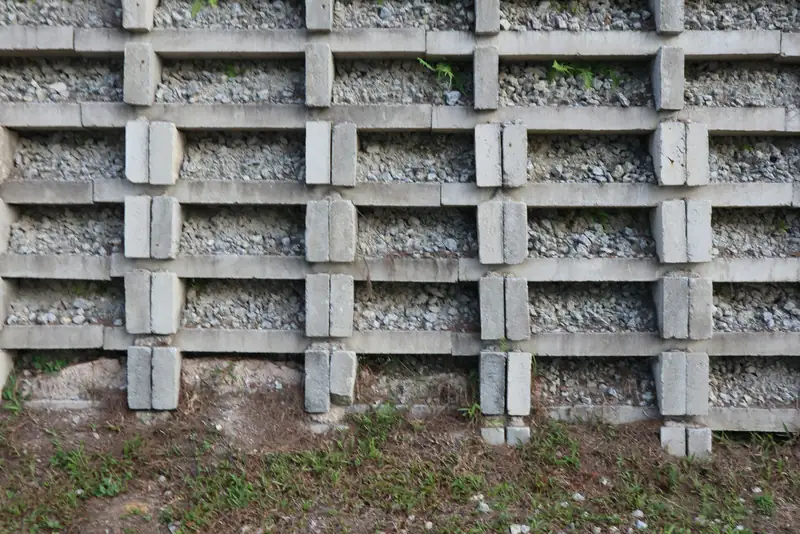
Which Comes First: A Retaining Wall, a Patio or Turf?
Structural and drainage work first, because it changes the grade everything else sits on. A retaining wall moves soil and often redirects water, so building it after a patio is already poured risks undermining or flooding the finished surface. Hardscape, a patio or walkway, comes second, since it needs a stable, already-graded base to sit on. Turf comes last by default, not because it's less important, but because it has no multi-day cure to protect and its washed-rock base is quick to tie into finished hardscape edges once everything around it is already in place.
| Phase | Typical driver | Florida market range |
|---|---|---|
| 1. Retaining wall and grading | Changes the grade; often needed before anything else can be built level | $15–$40 per sq ft of wall face |
| 2. Paver patio or walkway | Needs a stable, already-graded surface to sit on | $10–$17 per sq ft installed |
| 3. Artificial turf | No multi-day cure; ties into finished hardscape edges last | $10–$25 per sq ft installed |
Florida market ranges, October 2026; a site visit prices a specific yard's conditions.
How Do You Avoid Rework Between Phases?
Sleeving conduit for future lighting or an irrigation line under a patio before it's poured, even if that wiring won't go in until phase two or three, is far cheaper than cutting into finished pavers or a slab later to add it. Matching the compaction and base depth between adjoining phases keeps the transition from settling unevenly where one section meets the next, which otherwise shows up as a visible dip at the seam a year or two in. Keeping the same contractor, or at least sharing the first phase's as-built drawings with whoever does the next one, also avoids a second crew guessing at what's buried where the first phase left off.
How Do Permits and Deposits Work Across Multiple Phases?
Each phase is generally its own contract, which means Florida's lien-law thresholds apply separately to each one rather than to the project as a whole. A Notice of Commencement has to be recorded before work starts on any single phase priced over $2,500, even if an earlier phase already had its own (F.S. 713.13). The same logic applies to deposits: a deposit over 10 percent of a given phase's contract price starts that phase's own 30-day permit-filing clock, independent of what happened on the phase before it (F.S. 489.126). Treating each phase as its own contract, with its own paperwork, is more accurate than assuming one set of documents from the first phase covers everything that follows.
Say You're Phasing a Backyard in Davenport: Wall, Patio, Then Turf Over Three Years
A homeowner in Davenport with a sloped backyard budgets a segmental retaining wall for year one, since the slope has to be addressed before anything else can sit level behind it, then a paver patio for year two once the graded area behind the wall has settled, and artificial turf for the remaining lawn in year three. Each phase gets priced and contracted separately, with its own deposit and, where the price passes $2,500, its own Notice of Commencement, and the original full-yard concept plan from year one keeps the patio's edge and the eventual turf border lining up rather than being designed in isolation three years apart. Our retaining wall cost guide covers where Florida market pricing lands for a wall sized to a given slope.
Frequently asked questions
Should you design the whole backyard before building the first phase?
A rough full-yard concept plan before phase one starts is worth the extra step, even if only a fraction of it gets built right away. It keeps a later phase from conflicting with grading or edges already finished, and submitting the whole concept for any HOA review up front can save a round of paperwork compared to resubmitting piece by piece.
Does a retaining wall need to go in before a patio?
Generally yes, when both are part of the same yard. A retaining wall changes the grade and often redirects water, so building it after a patio is already poured risks undermining or flooding the finished surface. Structural and grading work typically comes first for that reason.
Can artificial turf be added years after a patio is finished?
Yes, and it's often the easiest phase to add later, since turf has no multi-day cure to protect and its base ties into existing hardscape edges without disturbing what's already built. Matching the original edge line and grade from the design plan keeps the later phase looking intentional rather than added on.
Does each phase of a multi-year project need its own Notice of Commencement?
Yes, if each phase is contracted separately and priced over $2,500. Florida's lien-law threshold applies per contract, not per overall project, so a phase built two years after the first one still needs its own Notice of Commencement recorded before work starts.
What's typically the most expensive phase of a backyard hardscape project?
It depends on scope, but a retaining wall usually carries the highest per-square-foot cost of the three, since it's priced by wall face rather than footprint and often includes engineering on taller sections. A patio or turf phase covering more area can still cost more in total even at a lower per-square-foot rate.