
Side Yard Ideas for Florida Homes: Turf, Pavers or Gravel
Side yard ideas for Florida homes start with what already runs through that narrow strip: a drainage swale, a utility easement or a meter run. Florida's 2026 turf rule bars synthetic turf inside a mapped swale or stormwater feature, and some counties bar paved surfaces from a drainage easement outright, as of October 2026, which narrows the material choice more than the side yard's width does.
By the Opera Concrete & Pavers estimating team · Updated October 1, 2026
What Makes a Florida Side Yard Different to Plan For?
A Florida side yard is often the narrowest usable strip on the lot, frequently carrying a drainage swale, a utility meter run or a buried easement that a front or back yard rarely has to deal with, so a side-yard plan starts with what is already running through that strip rather than with a finish material. Turf, pavers and gravel all work in a narrow side yard, but each one interacts with a swale or easement differently, which is the real decision behind a side-yard redesign more than the look of any single material.
Can Artificial Turf Go in a Side Yard That Doubles as a Drainage Swale?
Not where the side yard is an engineered drainage swale carrying stormwater between lots: Florida's 2026 turf standard specifically bars synthetic turf inside a swale, ditch, stormwater pond or a pond's littoral zone, regardless of how shallow or overgrown that swale currently looks (DEP Rule 62-308.100). A side yard that simply slopes a few inches toward a rear or side property line, without carrying a named, engineered swale, is a different situation, and turf there still has to meet the rule's permeability and grading requirements so water keeps moving through rather than pooling against the house. Checking whether a specific strip is a mapped drainage easement or just a graded low point is worth doing before ordering material, not after a crew shows up to install it.
Are Pavers Allowed in a Side-Yard Easement?
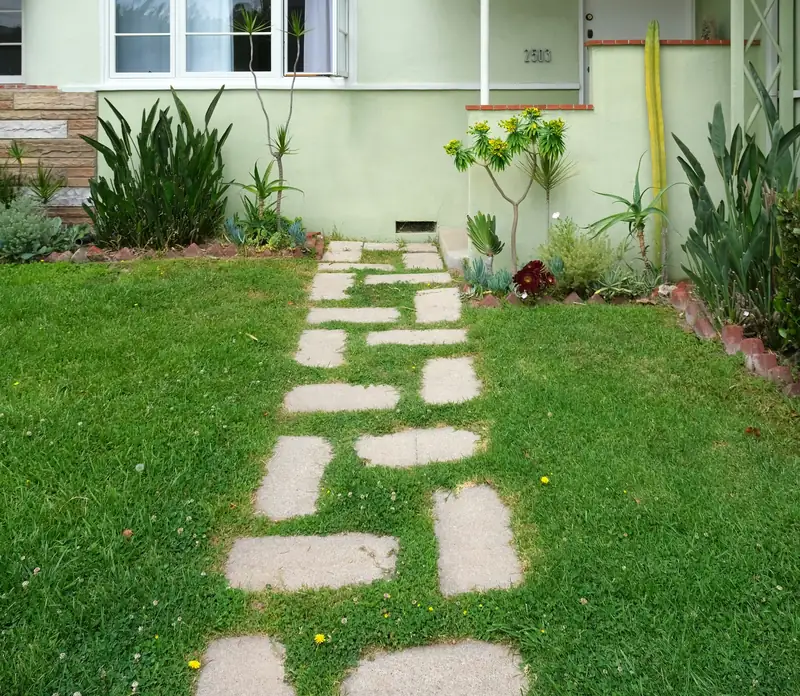
Often not, or only with the easement holder's sign-off, since a paved surface can block the access a utility or the county needs to maintain what runs underneath it. Sarasota County's drainage easement rule is explicit on this point for residential lots: no walkway, driveway or other paved surface may be located in the easement at all (Sarasota County Code). A removable or permeable surface, large-format stepping stones set with open joints rather than a continuously bonded paver field, is sometimes acceptable where a solid surface is not, because it still allows the ground underneath to be reached if a line ever needs repair; confirming that with the specific easement holder, not assuming it, is the safer order of operations. Gravel and compacted stone also count as impervious surface for lot-coverage purposes in at least one jurisdiction we checked, so a side yard's material choice can affect a lot's overall impervious surface ratio even when nothing is poured or set in mortar (City of Sanford, Schedule F).
How Wide Does a Side-Yard Path Actually Need to Be?
Wide enough for one person to walk comfortably with something in hand, a trash can, a hose reel or a ladder, which in practice means most side-yard paths land narrower than a front walkway or a connecting path elsewhere on the lot. A path built exactly to the clear width between the house and a fence or property line leaves no margin for a planting bed or a utility box along the way, so measuring the full available width before committing to a path's finished width avoids a redesign once a meter or a hose bib turns up mid-strip. Our paver patio and walkway page covers the base spec a path this narrow still needs.
What Works Better in a Narrow, Shaded Side Yard: Turf, Pavers or Gravel?
A side yard that runs along the shaded north or west face of a neighboring house dries out more slowly after rain than an open yard does, which matters more for material choice than square footage does. Sealed pavers resist the mold and algae a shaded, damp strip tends to grow faster than a sun-exposed patio does, while turf's open, permeable backing drains the strip without holding surface water the way bare dirt or mulch can in a narrow, low-airflow gap between two houses. Loose gravel moves and scatters in a strip this narrow more than it does spread across an open yard, since foot traffic in a tight side yard tends to follow one worn line rather than spreading the load, which is often the reason a gravel side yard needs regular raking that a paver or turf strip does not.
What Should a Side-Yard Gate and Access Path Plan Around?
An AC condenser, a gas or electric meter, a hose bib and the gate itself are the fixed points most side yards are built around, and planning the path's layout after those are marked, rather than running a straight line and working around them later, avoids an awkward jog partway down the strip. A gate wide enough for a trash can or a wheelbarrow, rather than just a person, is worth the extra foot of clearance if the side yard is the route trash and recycling bins travel on collection day, which it usually is on a lot with no direct side access from the driveway.
| Material | Works well where | Watch for |
|---|---|---|
| Artificial turf | A graded, non-swale strip; shaded ground that stays damp as bare soil | Barred inside a mapped drainage swale or easement |
| Paver stepping stones, open joints | A utility or drainage easement that needs access preserved | Confirm with the easement holder before installing |
| Full paver or concrete path | A clear strip outside any easement, used as regular walking access | Counts toward a lot's impervious surface total |
| Gravel | A low-traffic strip with no fixed walking line | Scatters along a single worn path with regular foot traffic |
Confirm which, if any, of these conditions apply to a specific strip before ordering material.
How Does a Side Yard Fit Into a Whole-Backyard Plan?
A side yard is usually the connector between the front of the house and the main backyard space, so its material and width choices work best when they are set after the backyard's own plan, not before it. Our low-maintenance backyard guide covers the whole-yard version of this planning question, zoning turf, pavers and planting beds across a full lot rather than one narrow strip.
Frequently asked questions
Can artificial turf go in a Florida side yard?
Only if that strip is not a mapped, engineered drainage swale, ditch or stormwater feature, which Florida's 2026 turf rule bars turf from regardless of how it currently looks. A side yard that is simply graded to slope away from the house, without carrying a named swale, is a different case and can usually carry turf if it meets the rule's drainage and permeability standard.
Can pavers be installed in a drainage or utility easement along the side of the house?
Often not. Sarasota County's rule bars any walkway, driveway or paved surface in a drainage easement outright, and other jurisdictions review easement work case by case. A removable, open-jointed stepping-stone layout is sometimes acceptable where a solid paver field is not, since it still allows access to what runs underneath.
How wide should a side-yard path be?
Wide enough to walk comfortably while carrying a trash can, hose reel or ladder, which in practice lands narrower than most front walkways. Measuring the full clear width between the house and the fence or property line before fixing a finished width avoids a redesign if a meter or hose bib turns up mid-strip.
Is gravel a good option for a narrow side yard?
It works where there is no fixed walking line, but foot traffic in a narrow strip tends to follow one worn path rather than spreading out, which scatters loose gravel faster than it would across an open yard. Gravel can also count toward a lot's impervious surface total in some jurisdictions, worth checking before assuming it is the lower-impact choice.
Does a shaded side yard need a different material than a sunny one?
It is worth favoring a material that handles standing moisture well. A shaded, low-airflow side yard dries more slowly after rain, which favors sealed pavers or turf's permeable backing over bare dirt, mulch or an unsealed surface that tends to grow mold or algae faster in that kind of spot.