
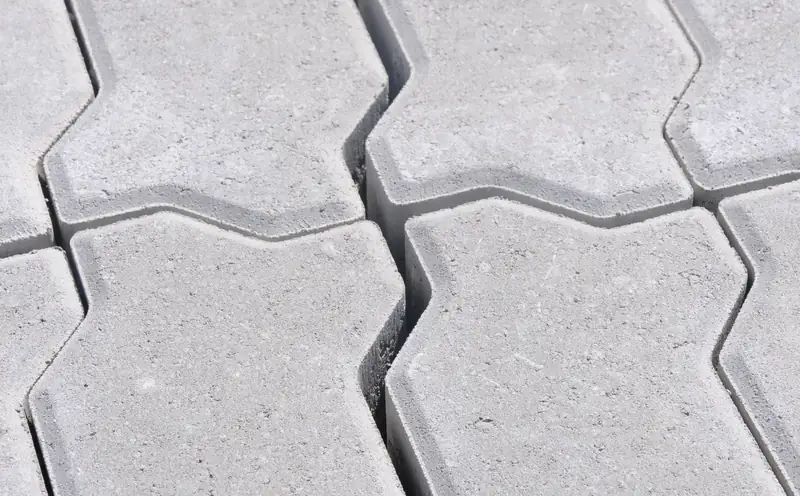
Paver Driveways · Winter Springs, FL
Paver Driveways in Winter Springs: Two Layers of Review
Expect $10–$30 per sq ft installed for a paver driveway in Winter Springs as of October 2026. Decorative pavers sit on the city's own approved-materials list for driveways, but a golf-course neighborhood like Tuscawilla can add its own architectural review on top of that city permit.
By the Opera Concrete & Pavers estimating team · Updated October 1, 2026
Get a free estimate
Tell us about the project and we'll call to set up a free site visit.
Decorative pavers are named on the city's materials list
Winter Springs' zoning code spells out which surfaces qualify for a residential driveway or designated parking area built since August 11, 2009: “concrete, asphalt, decorative pavers, brick, Eco-brick, crushed rock, gravel, geo-web with gravel, or turf block” (Code §20-439(e)). Pavers clear that list without an exception, but the same section's permit trigger still applies: any impervious material, including pavers, needs the driveway construction permit from Community Development before installation starts.
Tuscawilla's Country Club Village layers its own ACC sign-off on top
Inside Country Club Village at Tuscawilla, one HOA within the larger Tuscawilla community, the governing bylaws carry an exhibit specifically titled Driveway Pavers: redoing the whole driveway in new pavers, or laying thin pavers over the existing slab, “would need to be approved by the ACC with respect to color, style and configuration” (Country Club Village at Tuscawilla, ACC Request). That review is separate from, and in addition to, the city's own permit; a plain concrete driveway in the same HOA would still need ACC sign-off on its finish even though it isn't a paver product.
When the subgrade itself needs help before the base goes down
ICPI's spec admits its own 98 percent compaction standard may not be achievable in extremely saturated or very fine soils, and calls for stabilizing the subgrade instead of forcing the number on ground that won't take it. In practice that means dealing with the soil before a single scoop of aggregate base arrives, whether that's letting it dry out, adding a separation layer, or going with a different base depth altogether. A Winter Springs lot with sand over a denser layer behaves differently than one that's sand straight down, and the subgrade step is where that difference gets handled instead of ignored. Skipping it is a common reason a paver driveway starts to dip within a year or two.
The order a paver driveway actually goes in
The sequence doesn't vary much from job to job: excavate to the planned depth, compact the subgrade, place and compact the aggregate base in lifts, screed the bedding sand, lay the pavers course by course, cut units at the borders, install edge restraint, then sweep in and compact the joint sand. Each step depends on the one before it holding up, which is why a Winter Springs crew that rushes the base to reach the visually satisfying part, laying pavers, usually pays for it later in an uneven field. Nothing about the order is optional, even though only the last two steps are visible once the driveway is done and swept clean.
A paver overlay inside an HOA that reviews color and pattern
Say a home inside Country Club Village at Tuscawilla has a 440 sq ft driveway and wants thin pavers set over the existing concrete rather than a full tear-out. At $10–$30 per sq ft installed, that overlay runs roughly $5,280 to $8,800 depending on the paver chosen. Before ordering material, the homeowner submits the proposed color, style and configuration to the ACC under the bylaws' Driveway Pavers exhibit, and separately files for Community Development's driveway construction permit; one approval doesn't substitute for the other.
Concrete, brick, permeable or natural stone: what changes in the build
Market pricing for paver driveways runs roughly $10 to $30 per square foot installed, and the spread exists because the unit itself changes more than the installation method does. Concrete pavers sit toward the lower end of that range, brick a step above, and permeable or natural-stone units higher still, largely on material cost rather than labor. A permeable system also changes the base: instead of a fully compacted aggregate layer meant to shed water, it uses an open-graded stone structure built to let water pass through rather than run off a Winter Springs lot entirely. Choosing the material is really choosing which build the crew follows underneath, not just which color shows up at the surface.
A sunken paver driveway is almost never a sinkhole
Most dips in a paver driveway trace back to the base underneath: a spot that never reached full compaction, a wet area that settled differently than the rest of the lot, or bedding sand that migrated once water found a path through a joint. True sinkhole activity is a separate geological process, and claims for it concentrate heavily in a handful of counties, Hernando, Pasco and Hillsborough chief among them, with Orange County also appearing on the state's list of counties with the most reported claims. For a driveway in or near Winter Springs, a localized dip after a rainy season is far more likely to be ordinary base settlement than ground collapse, though a sudden, sharply defined depression is worth a second look regardless of which county it's in.
Checking edge restraint once a year
Edge restraint sits below grade and out of sight once a driveway is finished, which makes it easy to forget until the joints along the edge start widening or pavers near the perimeter begin creeping outward under traffic. A quick yearly check, pressing along the border by hand or foot near Winter Springs to feel for movement, catches a loosening spike or a section where landscaping work accidentally disturbed the restraint long before the problem reaches the field of pavers. Since the spikes anchor into the compacted base rather than the soil, restraint that's failing usually means something shifted at that connection, not that the whole system needs replacing, which keeps the fix smaller if it's caught early.
Frequently asked questions
Are decorative pavers an approved driveway material in Winter Springs?
Yes. The zoning code's approved-materials list for driveways and designated parking areas names decorative pavers directly, alongside concrete, asphalt, brick and several other surfaces.
Does every Tuscawilla HOA require ACC approval for driveway pavers?
Country Club Village at Tuscawilla's bylaws do, under an exhibit specifically covering driveway pavers; other HOAs inside the broader Tuscawilla community may run a different process, so check the specific association's documents rather than assume one rule covers all of Tuscawilla.
Does a paver overlay over existing concrete still need the city's driveway permit?
Yes. The permit trigger is the use of impervious material for the driveway, which an overlay satisfies the same way new construction does.
Sources
- Census Bureau PEP, City and Town Population Totals, Vintage 2025 (July 1, 2025)
- SJRWMD Watering Restrictions
- Florida Dept. of State - State Soil
- Florida Administrative Code — Rule 62-308.100, Synthetic Turf (effective May 19, 2026)
- Florida Statutes §125.572 — synthetic turf on single-family lots
- City of Winter Springs Code of Ordinances §20-439, Parking Areas on Residential Lots (via Zoneomics)
- City of Winter Springs, Site Work Permit Application
- City of Winter Springs, Building & Permits
- Country Club Village at Tuscawilla, ACC Request (Bylaws Exhibit IX, Driveway Pavers)
- Wikipedia, Winter Springs, Florida
- Wikipedia, Lake Jesup
- Play Orlando North, Central Winds Park
- Census Reporter, Winter Springs, FL (ACS 2024 5-yr, B25035)
Ready for a price on your project?
Request a free estimate
Tell us about the project and we'll call to set up a free site visit.