
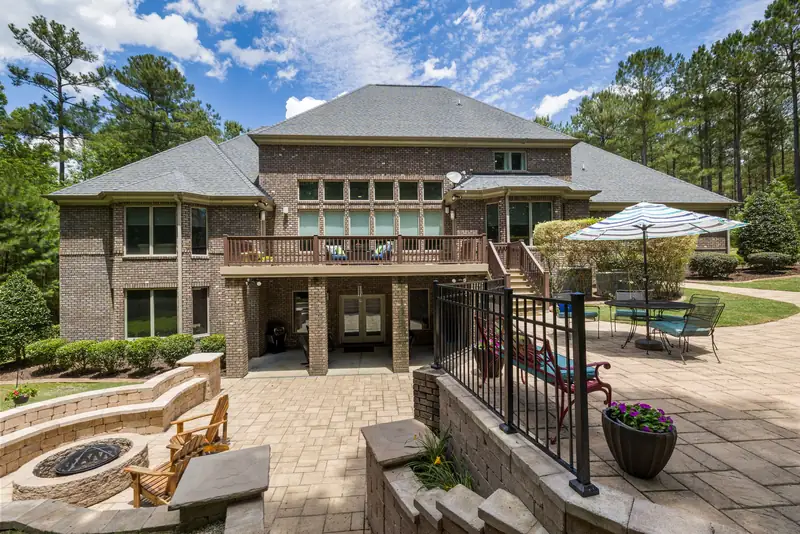
Paver Patios & Walkways · Winter Springs, FL
Paver Patios and Walkways for Winter Springs Yards
A paver patio in Winter Springs runs $10–$17 per sq ft installed as of October 2026. The city sits roughly 12 miles from the Orlando unit's base and holds the only developed, city-owned shoreline on Lake Jesup, inside Central Winds Park, so a lot anywhere near that side of town drains toward one of the largest lakes in the St. Johns River system.
By the Opera Concrete & Pavers estimating team · Updated October 1, 2026
Get a free estimate
Tell us about the project and we'll call to set up a free site visit.
Lake Jesup sets the drainage backdrop for lots on that side of town
Lake Jesup covers roughly 16,000 acres as part of the St. Johns River's middle basin, with a maximum depth of only about 10 feet and an average around 6 (Lake Jesup). Central Winds Park, the city's 103-acre complex that “includes sparkling Lake Jesup and a nature trail,” has sat on that shoreline since 1992 (Central Winds Park). Neither the city's Site Work Permit guidance nor its driveway code publishes a fixed setback from the lake for a paver patio; a yard that slopes toward it gets its grading worked out on site instead.
Base work where a screen enclosure sits on the patio
When a pool cage or screen enclosure shares the same patio, its footers are a different animal from the paver field around them. Enclosure posts typically land on isolated concrete footers set below the compacted base, not on the paver base itself, so the paver courses can settle or be lifted for maintenance without disturbing the structure overhead. On a Winter Springs job we lay out those footer locations before compacting the surrounding base, because cutting an isolated footing through finished aggregate later wastes a day and leaves a patch that compacts differently than the base around it. Coordinating the two scopes up front keeps the whole patio behaving as one surface.
The same paving-and-drainage permit covers a patio whether it's concrete or pavers
Winter Springs' Site Work Permit application groups “Paving, Grading, and Drainage” under one checkbox, so a paver patio goes through the identical review a poured concrete patio does, with work required to start within 60 days of issuance and wrap within a year (City of Winter Springs, Site Work Permit Application).
Bedding sand and joint sand aren't the same material
Bedding sand is the thin layer the pavers actually sit in, screeded to an uncompacted 1 inch before a single unit goes down. Joint sand is swept into the narrow gaps between pavers afterward and compacted in with a plate compactor, and ICPI specifies joints no wider than about 1/8 inch. Using the wrong sand in either layer, or skipping the compaction pass that locks joint sand in place, is one of the more common reasons a Winter Springs patio feels loose or individual pavers rock underfoot within the first year. Getting both layers right is a small part of the job in material cost and a large part of it in feel.
A paver patio on a lot a short walk from the Lake Jesup shoreline, worked out in square feet
Take a home a few streets from Central Winds Park adding a 18 by 16 ft paver patio, 288 sq ft, off the side of the house where the yard slopes gently toward the park's tree line. At $10–$17 per sq ft installed, that job runs roughly $3,456 to $4,608 depending on the paver pattern. Before the base goes down, the crew checks where that slope already carries water, since nothing in the city's published guidance sets a specific setback from Lake Jesup itself, only the general expectation that water keeps moving away from the house.
Day one on a paver patio job: layout and excavation
We start by staking the patio's actual footprint against the house, string lines pulled tight so the excavation depth accounts for base, bedding sand and paver thickness all at once rather than guessing and correcting later. Excavation on a Winter Springs lot usually goes a few inches past the planned finished grade to leave room for that full section, and we haul spoil off site the same day rather than stockpiling it on the lawn, since piled fill kills grass fast in Florida heat. By the end of day one the subgrade is cut, sloped and ready for whatever compaction the soil underneath needs.
Ants and weeds moving into the joints
Dry joint sand is an easy place for ants to excavate a nest and for windblown weed seed to germinate, especially in joints that were never compacted tight or that have washed thin over time. On a Winter Springs patio in a shaded or irrigated corner, both problems tend to show up together, since loose, damp sand is friendlier to ants and seedlings than sand that's been properly compacted and kept topped off. Re-sanding and compacting the joints removes the loose material both are living in, and it's a maintenance task, not a sign the patio was built wrong, though neglected joints make it worse.
Upkeep on a walkway versus a full patio
A narrow connecting walkway sees concentrated foot traffic along the same path every day, so its joints and bedding sand near the center wear faster than the edges, unlike a patio where wear spreads out more evenly across furniture zones and open space. Individual stepping pavers set in a lawn are even simpler to maintain, since a single unit that settles or tilts can be lifted and reset in its sand bed without touching anything around it. On a Winter Springs property with both a walkway and a patio, expect the walkway's joints to need attention more often even though it's the smaller surface.
Frequently asked questions
Is there a published setback from Lake Jesup for a paver patio in Winter Springs?
Not in the city's Site Work Permit guidance or its driveway code. The practical question is grading, since a lot sloping toward the lake has less natural fall to shed water than one farther from it.
How far is Winter Springs from the Orlando unit's base?
Roughly 12 miles. The city holds the only city-owned, developed shoreline on Lake Jesup, inside Central Winds Park.
Does a paver patio need a different permit than a concrete one in Winter Springs?
No. Both fall under the same Site Work Permit category for paving, grading and drainage.
Sources
- Census Bureau PEP, City and Town Population Totals, Vintage 2025 (July 1, 2025)
- SJRWMD Watering Restrictions
- Florida Dept. of State - State Soil
- Florida Administrative Code — Rule 62-308.100, Synthetic Turf (effective May 19, 2026)
- Florida Statutes §125.572 — synthetic turf on single-family lots
- City of Winter Springs Code of Ordinances §20-439, Parking Areas on Residential Lots (via Zoneomics)
- City of Winter Springs, Site Work Permit Application
- City of Winter Springs, Building & Permits
- Country Club Village at Tuscawilla, ACC Request (Bylaws Exhibit IX, Driveway Pavers)
- Wikipedia, Winter Springs, Florida
- Wikipedia, Lake Jesup
- Play Orlando North, Central Winds Park
- Census Reporter, Winter Springs, FL (ACS 2024 5-yr, B25035)
Ready for a price on your project?
Request a free estimate
Tell us about the project and we'll call to set up a free site visit.