
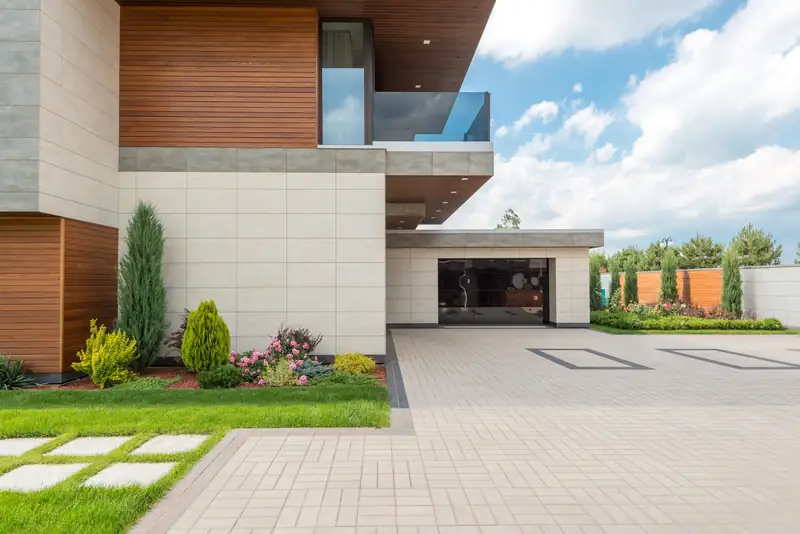
Paver Driveways · Davenport, FL
Paver Driveways for Davenport and the Four Corners Area
A paver driveway near Davenport runs $10–$30 per sq ft installed, per October 2026 Florida contractor figures. Much of the ground on this side of Polk County belongs to the same sand-hill formation that extends north into Lake County, and that history is what a compacted base under a paver driveway is actually responding to here.
By the Opera Concrete & Pavers estimating team · Updated October 1, 2026
Get a free estimate
Tell us about the project and we'll call to set up a free site visit.
A sand-hill chain that starts south of Lake County and runs through here
Scattered parcels of the Lake Wales Ridge National Wildlife Refuge lie just east of US-27 between Davenport and Sebring, the far southern end of the same formation that gives Lake County its hills farther north (Wikipedia, Lake Wales Ridge National Wildlife Refuge). Candler soil, mapped widely across that ridge, keeps groundwater from reaching within 80 inches of the surface (USDA NRCS, Candler soil series). None of that moisture ever threatens a paver base here the way it would on wetter flatwoods ground; instead, the crew's real job is packing loose, free-draining sand tight enough that it won't rut under a parked car.
When the subgrade itself needs help before the base goes down
ICPI's spec admits its own 98 percent compaction standard may not be achievable in extremely saturated or very fine soils, and calls for stabilizing the subgrade instead of forcing the number on ground that won't take it. In practice that means dealing with the soil before a single scoop of aggregate base arrives, whether that's letting it dry out, adding a separation layer, or going with a different base depth altogether. A Davenport lot with sand over a denser layer behaves differently than one that's sand straight down, and the subgrade step is where that difference gets handled instead of ignored. Skipping it is a common reason a paver driveway starts to dip within a year or two.
One FAQ answer covers only a slice of the driveway, not the whole thing
Polk County's own Building Division FAQ carves out driveway sections that fall inside the right-of-way or within the required setback as not needing a building permit; it does not say the same about the stretch of driveway on private property behind that line, and every section still has to satisfy the land development code's drainage standard (Polk County, Building FAQ). A paver driveway spanning both sides of that boundary line is effectively two filings bundled into one job, which is worth budgeting time for before pavers are ordered.
Why the bedding sand layer is exactly one inch, not an estimate
Between the compacted aggregate base and the pavers themselves sits a layer of bedding sand, screeded to a nominal 1 inch before it's ever compacted. That number isn't a rough guide: too little and the pavers rock on the base; too much and the layer compacts unevenly once traffic starts rolling over it. The joints between individual units are set at no more than one-eighth of an inch, tight enough that the field locks together once dry joint sand is swept in. On a Davenport driveway laid course by course, keeping that bedding layer consistent across the whole field is one of the steps that separates a flat surface from one with visible waves within a year.
Pricing a paver driveway by the numbers
A 16 by 42 foot paver driveway on an unincorporated Polk County lot comes to 672 square feet. At $10–$30 per sq ft installed, that job falls somewhere between $6,720 and $20,160 depending on the paver chosen. None of that estimate changes because of the sand underneath; what changes is the labor mix, since a crew here spends a larger share of the schedule on compaction passes and a smaller share on the drainage detailing a flatwoods lot farther east would need.
Joint sand compaction is the last step, not an afterthought
Once every paver is set and cut to fit, dry joint sand gets swept across the whole field and worked down into the eighth-inch joints, then the entire surface gets a final pass with the plate compactor to seat the sand and lock the units together. Skipping this step, or rushing it, leaves a driveway that looks complete but isn't actually interlocked yet; the pavers can still shift individually under a tire until the joints are filled and compacted. For a Davenport crew, that final compaction pass is also the point where a low or high paver still shows up and can be reset before the job is called finished, which is harder to do convincingly later.
Live oak roots under or near a paver driveway
A mature live oak's root system can extend well past its canopy, and roots running under a driveway don't stop growing once pavers sit on top of them; a root that thickens over a few years can lift a section of base and the pavers riding on it, usually along a visible seam rather than evenly. Several Central Florida and Sarasota-area cities protect larger live oaks by ordinance, which can limit root pruning or removal near a Davenport driveway even when a root is part of the problem. Routing a driveway's base around a known root zone, or accepting a shallower design near a protected tree, is often the more realistic fix than fighting the tree for the space.
Keeping sprinklers off the paver surface
A sprinkler head aimed across a driveway instead of at the lawn keeps a strip of pavers damp well after the surrounding ground has dried, exactly the kind of shaded, constantly wet condition that lets moss and algae take hold in the joints. It's worth checking head direction and spray pattern on any Davenport property where a zone borders the driveway, particularly since both the Orlando-area and Suncoast water districts restrict watering to specific days and hours, so a misaimed head is often running on a schedule nobody is watching closely. Redirecting or swapping the head is a small fix compared with the joint maintenance a chronically wet strip ends up needing.
Frequently asked questions
Why does a paver base near Davenport lean so heavily on compaction?
Because the native sand drains too well to hold water against the base in the first place. With nothing to manage on the drainage side, the crew's attention goes into packing that loose sand into a dense, stable layer that won't shift under vehicle weight.
Is the whole driveway permit-exempt in unincorporated Polk County?
No, only the sections inside the right-of-way or within the required setback, according to the county's own FAQ. The private-property portion of the same driveway is a separate question, and drainage rules apply to every section regardless.
Does the Lake Wales Ridge actually reach as far south as Davenport?
Yes. Separate tracts of the Lake Wales Ridge National Wildlife Refuge sit along US-27 between Davenport and Sebring, confirming that the ridge's sandy, fast-draining geology extends well south of its better-known high points in Lake County.
Sources
- Census Bureau PEP, City and Town Population Totals, Vintage 2025 (July 1, 2025)
- Florida Senate Interim Report 2011-104 (sinkhole insurance)
- SWFWMD District Water Restrictions
- NRCS OSD Candler
- NRCS OSD Astatula
- Florida Administrative Code — Rule 62-308.100, Synthetic Turf (effective May 19, 2026)
- Florida Statutes §125.572 — synthetic turf on single-family lots
- City of Davenport, Building Department
- Polk County, Building FAQ
- Wikipedia, Davenport, Florida
- Wikipedia, Four Corners, Florida
- Wikipedia, Lake Wales Ridge National Wildlife Refuge
- Census Reporter, Davenport FL (ACS 2020-2024 5-yr, B25035 & B25004)
Ready for a price on your project?
Request a free estimate
Tell us about the project and we'll call to set up a free site visit.