
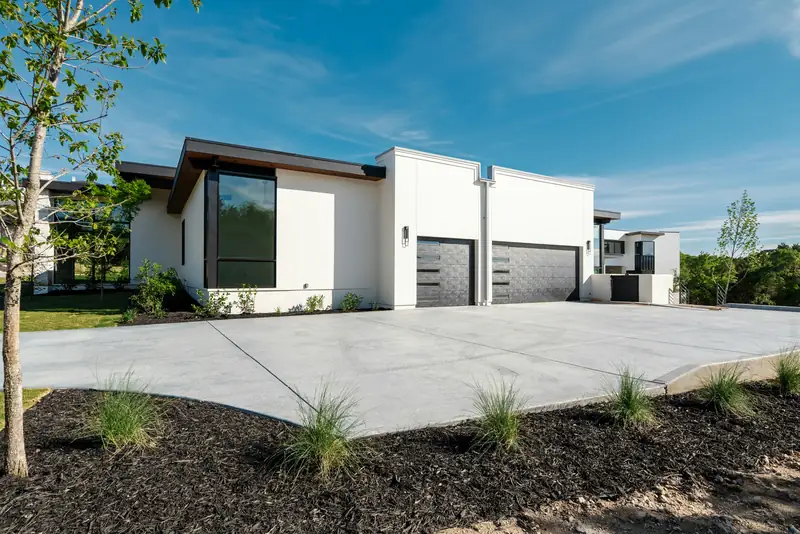
Concrete Driveways · Casselberry, FL
Pouring a Concrete Driveway in Casselberry
Market pricing for a Casselberry concrete driveway runs $6–$15 per sq ft installed, current as of October 2026. On top of that, the city charges a flat $100 for a driveway permit through its own Building Division, separate from whatever Seminole County charges just outside the city line.
By the Opera Concrete & Pavers estimating team · Updated October 1, 2026
Get a free estimate
Tell us about the project and we'll call to set up a free site visit.
A two-car driveway on a tight 1980s Casselberry lot, worked out in square feet
Say a Casselberry home from around the city's 1983 median construction year wants to go from a single 10 by 20 foot driveway, 200 square feet, to a full two-car width at 20 by 20 feet, 400 square feet. At $6–$15 per sq ft installed, that upgrade runs roughly $2,400 to $6,000 before the $100 permit fee, and because the house itself already sits close to the lot's 50 percent coverage line on a smaller older parcel, the extra 200 square feet is worth checking against the zoning table before the wider layout gets poured.
One flat fee, filed with the city rather than the county
Inside Casselberry, a driveway permit is a flat $100 through the Building Division at 95 Triplet Lake Drive, open Monday through Thursday (City of Casselberry, Building Division). That single fee covers the driveway itself; it doesn't by itself clear a separate right-of-way sign-off if the apron ties into a city-maintained street, so it's worth confirming with staff whether a given lot needs both before the quote is finalized.
Control Joints Aren't Decoration, They're Where We Want It to Crack
Concrete cracks as it shrinks while curing, and a control joint is cut into the slab specifically to decide where that crack happens instead of leaving it to chance. Industry guidance puts joint spacing at roughly 24 to 36 times the slab's thickness, which works out to about 8 to 12 feet apart on a standard 4-inch driveway, and never past about 15 feet even on a wider Casselberry pour. Each panel should come out close to square rather than long and narrow, and the groove itself needs to reach at least a quarter of the slab's depth to actually control the crack instead of just marking the surface.
A 50 percent ceiling that counts everything hard on the lot
Casselberry's single-family zones, R-8, R-9 and R-12.5, limit impervious coverage to 50 percent of the lot under the city's zoning table, with the driveway weighed against the same number as the house, any patio and the pool deck (Casselberry Zoning Ordinance Ch. II). On an older, smaller Casselberry lot, that ceiling can be the deciding factor on whether a two-car driveway is possible at full width or has to narrow somewhere along its run.
Grading the Driveway Away From the Garage Slab
A driveway that slopes toward the garage instead of away from it sends every afternoon storm straight at the house. Florida code requires fill to be compacted for uniform support, and part of getting that right is shaping the subgrade so water sheets off the surface and away from the foundation rather than pooling at the threshold. On a flat Casselberry lot, that sometimes means building the far edge of the driveway up slightly more than the garage end, even when the difference is not visible to the eye. It matters most on flatwoods soils that already hold water close to the surface for months at a time.
The Cracking That Starts Before the Slab Even Cures
When the evaporation rate from a fresh slab climbs above roughly 0.2 pounds per square foot per hour, which happens on hot, windy, low-humidity days, the surface can dry out faster than the concrete underneath gains strength. The result is plastic shrinkage cracking: thin, usually parallel cracks spaced a few feet apart that show up within hours of finishing. A Casselberry pour on a hot, breezy afternoon is exactly the kind of day this happens on, and once those cracks form they cannot be undone, only patched. Windbreaks, fog sprays and a dampened subgrade all reduce the risk, but only when the crew is watching the conditions, not just the clock.
Why We Start Early on a Summer Pour
On a hot Casselberry morning, waiting until midday to pour concrete works against a crew instead of for it. Guidance for hot-weather concreting calls for avoiding the hottest part of the day, because high heat speeds up how fast the surface dries relative to how fast the slab underneath is gaining strength. We start early so there is more working time before evaporation becomes a problem, and so finishing and the start of curing both happen before the afternoon heat peaks. Starting late is one of the easiest mistakes to avoid and still one of the most common.
A Driveway on Flatwoods Soil Needs Drainage Checked Every Wet Season
Flatwoods soils like Myakka and Smyrna hold water close to the surface for months at a stretch during the wetter part of the year, which means a driveway built on that kind of lot depends on its original grading continuing to shed water the way it was designed to. Mulch beds, new landscaping or a few years of settling can quietly change how water moves across a Casselberry yard and start directing runoff back toward the slab instead of away from it. Checking that the grading still slopes the right way each time the yard changes is cheap insurance against the kind of slow saturation that got the base into trouble in the first place.
Frequently asked questions
What does a Casselberry driveway permit cost?
A flat $100 through the city's Building Division, separate from any right-of-way sign-off that may apply where the apron meets a city street.
Does a two-car driveway in Casselberry always fit under the coverage cap?
Not automatically. The single-family zoning districts cap total impervious coverage at 50 percent of the lot, counting the house, driveway, patio and pool deck together, so a wider driveway on a smaller or older lot can run into that ceiling.
Is the Casselberry driveway permit different from Seminole County's?
Yes. Inside city limits, Casselberry's own Building Division reviews the permit. Just outside the city line, the same work falls under Seminole County's separate driveway construction application.
Sources
- City of Casselberry, General Information
- City of Casselberry, Building Division
- Casselberry Zoning Ordinance Ch. II, Table 2-5.4 (via Municode)
- Seminole County Water Atlas, Lake Kathryn
- Seminole County Water Atlas, Lake Concord
- Census Reporter, Casselberry, FL
- Census Reporter API, Casselberry median year structure built (B25035)
- SJRWMD Watering Restrictions
- Florida Administrative Code — Rule 62-308.100, Synthetic Turf (effective May 19, 2026)
- Florida Statutes §125.572 — synthetic turf on single-family lots
- F.S. 720.3045 (2026) Installation, display, and storage of items
- NRCS OSD Myakka
Ready for a price on your project?
Request a free estimate
Tell us about the project and we'll call to set up a free site visit.