
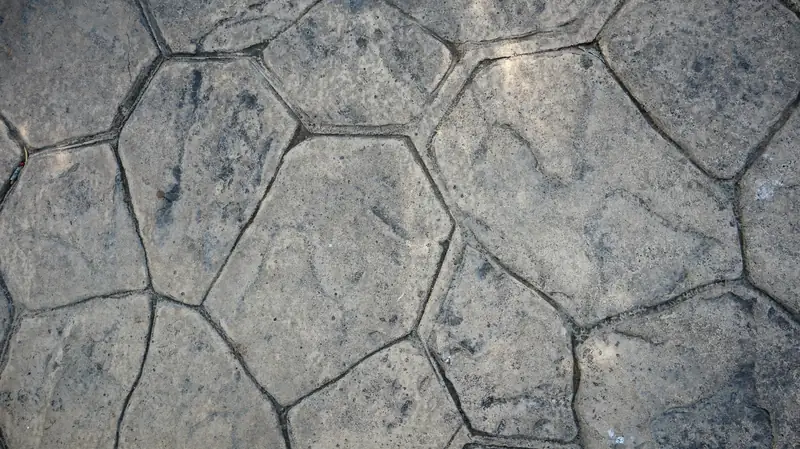
Stamped Concrete · Venice, FL
Stamped Concrete Driveways and Patios in Venice
Stamped concrete in Venice runs $8–$19 per sq ft installed as of October 2026. Downtown, the John Nolen Plan Historic District's 1920s grid tends toward a muted, period-appropriate pattern, while the city's newer, fast-growing subdivisions give homeowners more room to choose a bolder stamp and color.
By the Opera Concrete & Pavers estimating team · Updated October 1, 2026
Get a free estimate
Tell us about the project and we'll call to set up a free site visit.
A 1926 planned district downtown shapes the pattern choice, not the permit
The John Nolen Plan Historic District, listed on the National Register of Historic Places in September 2009, was laid out in 1926 by planner John Nolen for the Brotherhood of Locomotive Engineers and is bounded by Laguna Drive to the north, Home Park Road to the east, the Corso to the south and the Esplanade to the west Wikipedia, John Nolen Plan of Venice Historic District. Nothing in that designation dictates a stamp pattern, but homeowners inside the district tend to gravitate toward a quieter slate or ashlar look over a busier, brightly colored cobble job, since the latter can read out of place against a 1920s facade in a way it wouldn't on a 1990s subdivision street.
Four Inches Is the Driveway Standard, Decorative or Not
A stamped driveway built for daily passenger traffic follows the same thickness rule as a plain one: 4 inches at 3,000 to 4,000 psi, with Florida's code minimum of 3 1/2 inches written for ordinary floors rather than a surface carrying a car's weight every day. Thickness does not change because the surface will be stamped and colored. What changes is the price of getting it wrong: thickening a plain driveway later means breaking out and repouring gray concrete, while fixing an undersized stamped Venice driveway means matching a pattern, a color and however much the sealer has already weathered before the repair crew shows up.
A stamped entry walk in the Nolen district, worked out in square feet
Say a 350 square foot stamped-concrete front walk and entry patio replaces a cracked original path on a lot inside the John Nolen Plan Historic District, near the Corso. At $8–$19 per sq ft installed, that project prices between $2,800 and $6,650, settling closer to $4,200 to $5,600 inside the typical $12–$16 range once the pattern and color count are set. Given the address, a single-color slate or ashlar layout is usually where the conversation with the homeowner lands, since a louder, multi-tone cobble finish tends to clash with the proportions of a house built to the Nolen plan's original scale.
Stamped work still answers to the same opening and right-of-way rules
A stamped driveway or walkway crossing into the public right-of-way needs the same Right-of-Way Use Permit as a plain pour Venice LDR §9.1, and a stamped finish doesn't change how many openings a lot's frontage supports under LDR §3.1 Venice LDR §3.1. On the narrower lots common in the historic grid, that frontage math matters more than it does on a wide subdivision lot, since a downtown property is more likely to sit close to the single-opening threshold. A plain concrete driveway on the same lot faces an identical frontage and right-of-way review.
Flaking Color Hardener Is a Floating Problem, Not a Pattern Problem
Color hardener that is broadcast onto a surface too wet, or floated in before enough of it has absorbed moisture from the slab, can form a thin shell that never fully bonds to the concrete underneath, and that shell eventually flakes or spalls off under traffic, usually within the first year or two. It has nothing to do with which stamp pattern was used and everything to do with the floating technique and the timing of the broadcast relative to the slab's set. A Venice homeowner who notices small chips revealing gray concrete under a colored surface is looking at a hardener application problem, not a sign the whole pour needs to be replaced.
Ridge Sand Needs Wetting Before It Will Compact for a Driveway
West of Orlando, sand ridge soils such as Candler and Astatula drain so well that the water table can sit more than 80 inches down, which sounds like easy ground but loose, excessively drained sand will not lock together under a plate compactor the way firmer soil does. For a stamped driveway on a ridge lot in Venice, we wet the base material enough to bind it and compact it in shallow lifts rather than one deep pass. Skipping that step on a decorative driveway is a costlier mistake than on a plain one, since replacing a sunken panel means matching a color and pattern that has already weathered a season or two.
The Day After: Washing Off Release and Seeing the Real Color
The release agent used to keep stamp mats from sticking leaves a chalky residue across the whole surface, and the color underneath does not show its true tone until that residue is pressure washed off, typically once the slab has firmed up enough to walk on without damaging the texture. On a Venice job, this cleanup happens as its own step, separate from the pour and the stamping day, and it is often the first time a homeowner sees what the finished color actually looks like rather than the dusty version visible right after stamping. Sealing comes later, once the slab has fully cured, not at this stage.
A Hairline Crack Usually Follows a Grout Line First
On a stamped surface, ordinary shrinkage cracking tends to travel along the weakest point available, which is often a grout line already built into the pattern, rather than cutting a random path the way it might across plain concrete. A Venice homeowner checking a patio or driveway for cracks can start by looking along the pattern's existing lines before assuming a crack running elsewhere is something worse. What is worth a call, on a stamped surface the same as any other, is a sudden depression paired with cracking that reaches toward a structure, not a hairline that has been sitting quietly along a grout line for a season or two.
Frequently asked questions
Does stamped concrete in the Nolen Historic District need special approval?
No separate review was found tied to the stamp pattern itself; the standard Right-of-Way Use Permit and the frontage-based opening count under LDR §3.1 apply the same as anywhere else in the city.
What pattern suits a 1920s Venice home best?
A muted slate or ashlar pattern in a single integral color tends to read more period-appropriate on a John Nolen Plan Historic District lot than a bright multi-color cobble pattern built for a newer subdivision.
Does stamped concrete cost more than plain concrete in Venice?
Yes, the labor for the release agent, integral color and stamping pushes the price above a plain pour, though the subgrade work, frontage math and right-of-way review underneath it don't change based on the finish chosen.
Sources
- Venice LDR §9.1 Defined Terms (Right-of-Way Use Permit)
- Venice LDR §3.1 General Development Standards
- Venice LDR §3.8 Fences, Walls, Berms, and Retaining Walls
- Venice Engineering — Permits, Forms and Applications (search excerpt)
- Venice Building Division FAQ (search excerpt)
- Venice Building Permit Guidelines (3rd-party copy, FBC 2014 era)
- Census Bureau PEP, City and Town Population Totals, Vintage 2025 (July 1, 2025)
- Census Reporter, Venice FL (ACS 2020-2024 5-yr, B25035)
- Wikipedia, John Nolen Plan of Venice Historic District
- SWFWMD District Water Restrictions
- FDOT Structures Design Guidelines Vol. 1, §1.3.2 environmental classification
- FEMA - Features of Flood Insurance Rate Maps in Coastal Areas
- FDEP Coastal Construction Control Line Program
- FDEP — Apply for a CCCL permit
- Florida Senate Interim Report 2011-104 (sinkhole insurance)
- Sarasota County Code §124-255 Additional Provisions (culverts)
- Sarasota County Code §124-76 District Development Standards
- Sarasota County Code §22-63 (retaining walls > 4 ft engineered)
- Sarasota County Online Permitting
- Florida Administrative Code — Rule 62-308.100, Synthetic Turf (effective May 19, 2026)
- Florida Statutes §125.572 — synthetic turf on single-family lots
- Venetian Golf & River Club POA, ACC Application
- Sarasota County / USF Water Atlas, Intracoastal Waterway (Venice)
- Sarasota County / USF Water Atlas, Roberts Bay (Venice)
Ready for a price on your project?
Request a free estimate
Tell us about the project and we'll call to set up a free site visit.