
Stamped Concrete Maintenance in Florida: Resealing, Fading and Flaking
Stamped concrete in Greater Orlando and Sarasota–Manatee typically needs a fresh sealer coat every 2 to 3 years, sooner on a deck in full sun or near salt air, as of October 2026. Fading usually means UV has worn the sealer thin; peeling, bubbling or a whitish film almost always means moisture got trapped under a coat applied too thick, too soon, or over a damp or hot slab.
By the Opera Concrete & Pavers estimating team · Updated October 1, 2026
How Do You Know When Stamped Concrete Needs Resealing?
Watch the surface itself rather than a date on a calendar: water that used to bead and roll off now soaks in, the sheen has gone dull or chalky, or a color that looked rich when it was new reads flat in direct sun. Those are the signs a sealer coat has worn through, well before the pattern or the concrete underneath is at any risk. Florida contractor guidance generally points to resealing stamped concrete every 2 to 3 years, sooner on a pool deck or a driveway in full sun, since intense UV and heat wear an acrylic coating down faster here than in a milder climate (Concrete Solutions FL, concrete sealing guide). A shaded walkway under oak canopy can go considerably longer between coats than a charcoal driveway baking all afternoon.
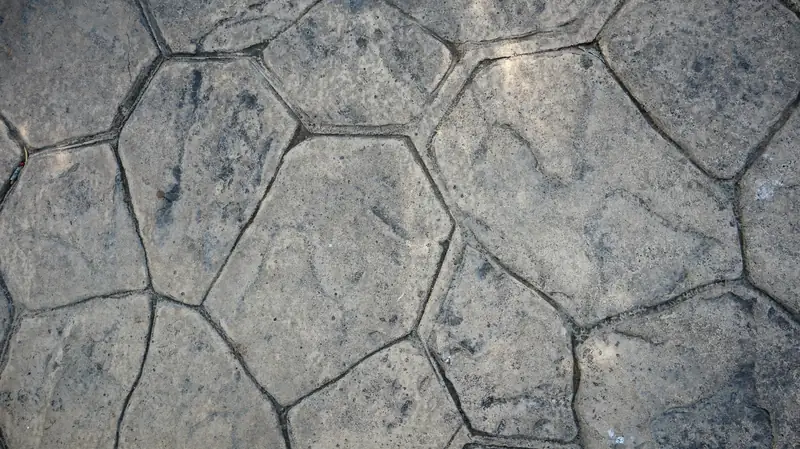
Why Does Stamped Concrete Fade in Florida?
A sealer coat is what carries most of a stamped slab's color depth and sheen, and sealer wears thin under UV exposure and foot or tire traffic the same way a car's clear coat does, which is why a faded-looking stamped surface is almost always a sealer problem rather than a color problem underneath. Manufacturer guidance on decorative sealers describes this as ordinary wear from traffic, weather and UV light, with reapplication generally recommended every three to five years nationally, a window Florida sun tends to shorten (Brickform, how to fix concrete sealer). Integral color, mixed through the full thickness of the slab at the plant, doesn't fade the same way the surface sheen does; a fresh coat of clear sealer over a worn, dull stamped surface typically restores most of the lost richness without restaining anything.
Why Is My Stamped Concrete Peeling, Bubbling or Turning White?
Peeling, bubbling and a milky white film are a different problem from fading, and they almost always trace back to moisture trapped under the sealer rather than UV wear. A sealer applied too thick, in more coats than the product calls for, or over a slab that hadn't fully dried can trap solvents and moisture under the film; the same thing happens when a hot slab is sealed and the trapped air underneath expands into bubbles (Brickform, sealer troubleshooting). That's a different failure than efflorescence, which is a mineral bloom that shows up before any sealer goes down rather than after; our write-up on efflorescence covers how to tell the two apart. A peeling or bubbled coat generally needs to be stripped back to bare concrete and reapplied in thin, even passes rather than patched over the failure.
Stamped Concrete Problems, Causes and Fixes
| What you see | Likely cause | What to do |
|---|---|---|
| Dull, chalky sheen; water soaks in instead of beading | Normal UV and traffic wear on the sealer | Clean and reseal; no need to restain |
| Peeling, bubbling or a milky white film | Moisture trapped under a coat applied too thick, too soon, or over a hot or damp slab | Strip the affected area, let it dry fully, reseal in thin coats |
| Flat, washed-out color that looks worse up close than from the driveway | Worn sealer over integral color that's still intact underneath | A standard reseal usually restores most of the depth |
| Slick, slippery underfoot when wet | Film sealer with no slip-resistant additive | See our guide to a slippery pool deck |
| Efflorescence-like white haze that appeared before any sealer went on | Mineral bloom from inside the concrete, not a sealer failure | See the white haze on new concrete and pavers |
How to Clean and Reseal Stamped Concrete, Step by Step
- Clean the surface thoroughly. A pressure wash at a modest setting clears dirt and grime out of the pattern's recessed lines, where it tends to collect more than on a flat broom finish.
- Let it dry completely, not just on the surface. Sealing over a slab that's damp a half-inch down, not just dry to the touch on top, is the single biggest cause of trapped-moisture failures.
- Patch or address any bare, worn spots first. A high-traffic path that's worn through to bare concrete gets cleaned and primed before the rest of the surface is coated, so the new sealer doesn't lay unevenly over the transition.
- Apply sealer in thin, even coats. Two light passes bond and cure more reliably than one heavy one, which is where most peeling and bubbling starts.
- Add a slip-resistant additive around a pool. A fine polymer grit mixed into the final coat keeps a wet deck from going slick once the sealer is reapplied.
- Keep traffic off while it cures. Foot traffic generally returns within a day; give it longer before parking a car or moving outdoor furniture back across it.
How Do You Clean Stamped Concrete Between Resealing Visits?
The same mild-cleaner, low-pressure approach that works on pavers applies to stamped concrete, with one difference: the textured pattern holds dirt and pollen in its recessed grout lines longer than a flat paver joint does, so a slightly longer dwell time with a soft brush before rinsing gets more out of those grooves. Skip acidic or ammonia-based cleaners here too; they dull a stamped sealer's sheen faster than ordinary weathering does, the same risk that applies to a sealed paver surface. Our paver cleaning guide goes through pressure settings and safe products in more detail, most of which carries over directly to a stamped slab.
Frequently asked questions
How often should stamped concrete be resealed in Florida?
Roughly every 2 to 3 years for a Florida stamped surface, sooner for a pool deck or a driveway in full sun, since UV and heat wear an acrylic coating faster here than in a milder climate. Watching for a dull sheen or water that stops beading is more reliable than counting years on a calendar, since shade, color and traffic all shift the real timeline.
Why did my stamped concrete turn white after I sealed it?
A milky or whitish film right after sealing is almost always trapped moisture, from sealing a slab that wasn't fully dry, applying too heavy a coat, or sealing over a hot surface that trapped expanding air underneath. It needs to be stripped and reapplied under drier conditions and in thinner coats rather than left to clear on its own.
Can I reseal stamped concrete myself?
A straightforward reseal on a clean, dry, otherwise sound surface is within reach for a careful homeowner, provided the product's coverage rate and cure time are followed closely; most failures come from applying sealer too thick or too soon rather than from the product itself. A deck with peeling, flaking or active moisture problems is better handled by someone who can diagnose why the last coat failed before putting a new one down.
Does resealing fix faded stamped concrete, or do I need to restain it?
In most cases, resealing alone restores the lost depth and sheen, since the integral color mixed into the slab at the pour is usually still intact underneath a worn sealer. Restaining is only needed where the color itself, not just the sealer, has visibly changed, which is far less common than ordinary sealer wear.
Is resealed stamped concrete slippery around a pool?
It can be if the new coat is a plain, high-gloss film with no additive mixed in. A fine polymer grit blended into the final sealer coat restores grip without changing how the pattern looks; our guide to fixing a slippery pool deck covers the options for an existing deck that already feels slick.