
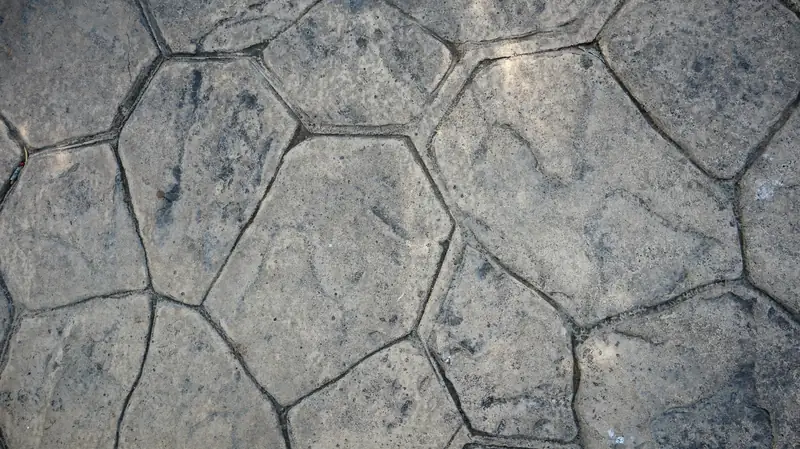
Stamped Concrete · St. Cloud, FL
Stamped Concrete Driveways and Patios in St. Cloud
A stamped-concrete project in St. Cloud runs $8–$19 per sq ft installed as of October 2026, shifting with the stamp pattern and how many integral colors go into the mix. The city groups “Subdivision or Retaining Wall” work on its permit-required list, the category a decorative entry wall or a stamped border tied into a subdivision monument sign typically falls under.
By the Opera Concrete & Pavers estimating team · Updated October 1, 2026
Get a free estimate
Tell us about the project and we'll call to set up a free site visit.
One permit line covers both a retaining wall and subdivision-entry work
St. Cloud's Building Division lists “Subdivision or Retaining Wall” as one item on its permit-required side, grouped with the concrete-pad and pool-and-spa categories rather than broken out separately (City of St. Cloud, Permit Information). A stamped driveway or walk on an individual home lot usually doesn't trigger that particular line unless it ties into a retaining wall or a subdivision's own entry feature, worth confirming with the Building Division before a design with a decorative wall component gets finalized.
Ridge Sand Needs Wetting Before It Will Compact for a Driveway
West of Orlando, sand ridge soils such as Candler and Astatula drain so well that the water table can sit more than 80 inches down, which sounds like easy ground but loose, excessively drained sand will not lock together under a plate compactor the way firmer soil does. For a stamped driveway on a ridge lot in St. Cloud, we wet the base material enough to bind it and compact it in shallow lifts rather than one deep pass. Skipping that step on a decorative driveway is a costlier mistake than on a plain one, since replacing a sunken panel means matching a color and pattern that has already weathered a season or two.
St. Cloud sits about 21 miles from Opera's Orlando base
St. Cloud is roughly 21 miles from central Orlando, close enough that a crew already working a job in Kissimmee or Orlando the same week can typically fit in a St. Cloud estimate without a dedicated trip. That distance also means St. Cloud draws on the same material suppliers and release-agent colors available across the rest of the Orlando unit, rather than a separate regional supply chain.
Control Joints Still Exist, They're Just Hidden in the Pattern
A stamped surface does not get a pass on control joints; the same spacing guidance that applies to plain concrete, roughly 24 to 36 times the slab's thickness, still governs a stamped driveway or patio. What changes is where the joint goes: rather than cutting a visible groove across a decorative surface, the layout is planned so a joint falls along a grout line already built into the pattern, usually where one course or color band meets another. On a St. Cloud job with an irregular layout, an L-shaped patio wrapping a pool equipment pad for instance, that planning happens before the first mat is pressed, since a joint added afterward would cut straight through the pattern instead of hiding in it.
A stamped driveway-and-walk combination, worked out in square feet
Say a St. Cloud home replaces a plain 300 square foot driveway-and-front-walk combination with a slate-pattern stamped finish and one integral color. At $8–$19 per sq ft installed, that 300 square feet prices out between roughly $3,600 and $4,800, with a second color or a hand-applied release agent pushing it toward the higher end. If the design adds a short decorative wall at the walk's edge, that piece is what's worth checking against the city's “Subdivision or Retaining Wall” permit line, even though the stamped slab itself doesn't trigger that review on its own.
Breaking a Large Pool Deck Into Sections the Crew Can Keep Up With
A big pool deck or a long stamped driveway can outrun a crew's working time if it is poured all at once, since the leading edge may already be stiffening by the time the trailing edge is screeded. Splitting the pour into sections, with a planned joint at each day's stopping point, lets the crew finish, broadcast hardener, texture and stamp one section fully before the concrete sets, rather than racing the whole slab against the clock. On a St. Cloud job large enough to need more than one pour day, that section joint gets planned into the pattern layout in advance, so it reads as part of the design rather than an afterthought.
Why Fine Surface Cracking Shows Up More on a Colored Slab
Crazing, the web of hairline surface cracks that can form when a slab's surface dries faster than hot-weather guidance recommends, is largely cosmetic and does not weaken a plain gray driveway much, but the same crazing on an integrally colored or hardener-finished surface catches light differently than the surrounding concrete and reads as a network of pale lines against the color. A St. Cloud pour finished on a hot, high-evaporation day without the usual mitigations, fog spray, a dampened subgrade, an evaporation retarder, risks crazing that would barely register on plain concrete but stands out clearly once the color and sealer are on.
Clogged Pattern Lines Trap Water Longer Than a Driveway's Control Joints
A stamped pattern has more linear feet of grout lines than a plain slab has control joints, and once those lines fill with leaves, sand or mulch heading into the wetter months, they hold standing water against the surface longer than an open groove would, which in Florida's humidity is enough to start mold or algae growth in the low points of the pattern. Sweeping or rinsing a St. Cloud patio's pattern lines clear before the rainy season gets going keeps that from taking hold. It is a simple habit, but one that is easy to skip on a surface that still looks clean everywhere except down in the grooves.
Frequently asked questions
Does a stamped-concrete driveway need a permit in St. Cloud?
On its own, usually not beyond whatever applies to a standard driveway or patio. Adding a retaining or decorative wall as part of the design is what pulls in the city's “Subdivision or Retaining Wall” permit category.
How far is St. Cloud from Opera's Orlando service area?
About 21 miles from central Orlando, close enough that a crew already working in Kissimmee or elsewhere in the Orlando unit the same week can usually fit in a St. Cloud job without a dedicated trip.
Do St. Cloud stamped-concrete jobs use different colors than the rest of Central Florida?
No. The market range and the available patterns and release-agent colors are the same across the Orlando unit; St. Cloud isn't on a separate supply chain.
Sources
- City of St. Cloud — Permit Information
- City of St. Cloud — Public Works Fees
- Census Bureau PEP, City and Town Population Totals, Vintage 2025 (July 1, 2025)
- Census Reporter, St. Cloud, FL (ACS 2020-2024 5-yr, B25035)
- NRCS OSD Smyrna
- NRCS OSD Myakka
- NRCS OSD Basinger
- Osceola County — Parking Ordinance, Ch. 22 Art. II (Sec. 22-50.6)
- Florida Administrative Code — Rule 62-308.100, Synthetic Turf (effective May 19, 2026)
- Florida Statutes §125.572 — synthetic turf on single-family lots
- Florida Statutes §720.3045 — items not visible from the frontage or an adjacent parcel
- Toho Water Authority, Watering Days and Times
- Toho Water Authority, St. Cloud Utility Integration News Release
- Wikipedia, St. Cloud, Florida
Ready for a price on your project?
Request a free estimate
Tell us about the project and we'll call to set up a free site visit.