
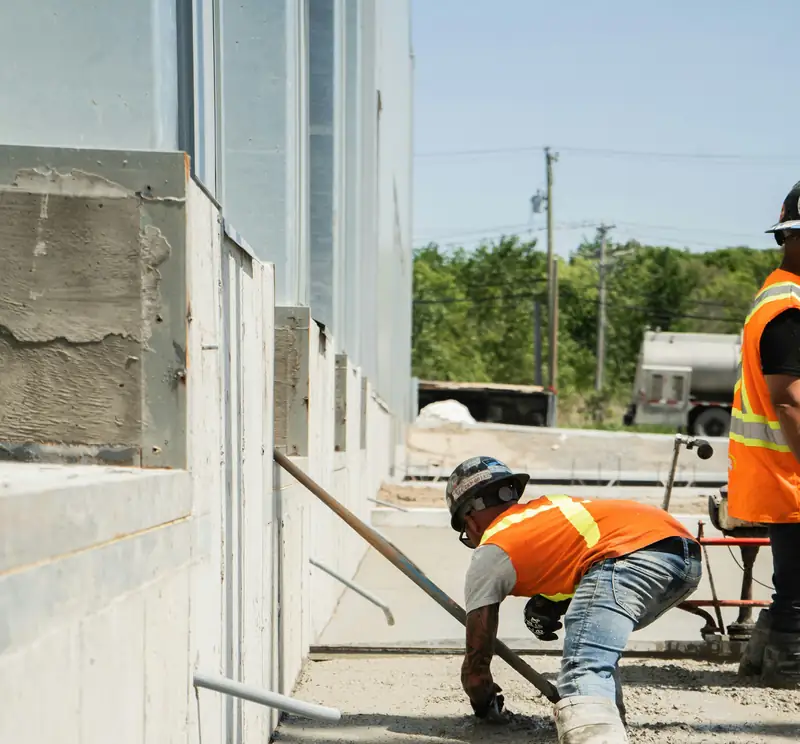
Concrete Slabs · Kissimmee, FL
Concrete Slabs for Sheds, Pads and Parking in Kissimmee
A concrete slab in Kissimmee runs $4–$10 per sq ft installed as of October 2026. Inside the city, a shed, AC or parking pad goes through the “Slab With/Without Footer” permit type; in unincorporated Osceola County, a small enough job may instead qualify for the state's 2026 exemption, applied through the county's own disclosure form.
By the Opera Concrete & Pavers estimating team · Updated October 1, 2026
Get a free estimate
Tell us about the project and we'll call to set up a free site visit.
A shed pad on each side of the city line, worked out in square feet
Say a 10 by 12 foot shed pad, 120 square feet, goes in on a lot near the Kissimmee city line. At $4–$10 per sq ft installed, that lands between roughly $480 and $1,200 depending on the mix and reinforcement. Inside the city, that pad is filed as a slab permit through Permitting. On an otherwise identical lot in unincorporated Osceola County, the same pad may qualify for the state's exemption instead, filed through the county's disclosure form rather than a full permit review, though confirming that with the Building Office is worth doing before the forms go up.
The city's slab permit type covers sheds, AC pads and parking pads alike
Kissimmee's permit-types page lists “Slab With/Without Footer” as its own building permit category, separate from the pool-and-spa line item and the “Fences & Walls” category (City of Kissimmee, Types of Permits). A 10 by 10 foot shed pad and a full RV parking slab both fall under that same category inside the city limits; size changes the fee and the review, not which permit type applies. Call Permitting at 407-518-2379 or [email protected] to confirm the specific submission a given pad needs.
Garage Floors and Carports Carry Their Own Strength Number by Code
Florida's residential code sets concrete strength for porches, carports and garage floors by weathering exposure rather than by a single flat number: 2,500 psi for negligible weathering, 3,000 for moderate and 3,500 for severe, a separate table from the strength used for an ordinary interior slab. A Kissimmee garage addition or carport pad gets specified against that table rather than against whatever mix a driveway nearby happens to use, since the two surfaces answer to different code sections even when they sit a few feet apart. Mixing up which psi number applies to which structure is an easy paperwork mistake with a real cost difference once the order goes in to the plant.
The county applies the state's exemption through its own disclosure form
In unincorporated Osceola County, a small slab under the state's 2026 permit-exemption threshold is handled through an “Owner Disclosure of Exempt Work” form sent to [email protected], rather than a full building-permit submission (Osceola County, Permit Information). The county's Homeowners page doesn't spell out a separate process for slabs, pavers or retaining walls beyond that disclosure route, so a call to the Building Office at 407-742-0200 is the way to confirm whether a specific pad qualifies (Osceola County, Homeowners).
Ridge Sand Needs the Same Wetting for a Garage Slab as a Driveway
On the sand ridge soils west of Orlando, Candler and Astatula among them, the water table can sit more than 80 inches down, and that loose, excessively drained sand will not lock together under a compactor the way a firmer soil would without being wetted first. A detached garage or carport slab in Kissimmee built on ridge sand needs the same shallow-lift compaction a driveway would get, even though the pad itself might look like a simpler pour. Skipping that step on a garage floor that will carry a vehicle's full weight, parked rather than rolling, risks a slow settle right where the tires sit longest.
Skipping the Vapor Retarder Now Can Cost More if the Shed Becomes a Room
Code allows a vapor retarder to be skipped under garages and unheated accessory structures, which covers most ordinary storage sheds, but that exception assumes the space stays unconditioned. A Kissimmee shed built today without a retarder and converted into a workshop, an office or any heated, finished space later inherits a slab that was never built to block ground moisture from migrating up through it. Retrofitting a retarder under an existing slab is not realistic, so the only real fix at that point is a sealer or coating applied on top, a weaker solution than the retarder would have been if the pad's eventual use had been planned for at the pour.
Squaring a Shed or Garage Pad to the House Before Forms Go Up
Unlike a driveway, which mostly follows the curb and the garage opening it already has to line up with, a detached shed or garage addition pad usually gets laid out from scratch, staked and squared against the existing house corners rather than against anything already built on the lot. On a Kissimmee job, that survey and layout step happens before grading starts, since an out-of-square form is much harder to correct once compacted fill and forms are both in place. Getting the layout right also decides how much the finished pad's edges line up with a fence line, a property setback or wherever the structure itself will eventually sit.
A Crack Under the Wheel Line Means Something Different Than One Elsewhere
On a pad that regularly carries a boat trailer or an RV, a crack that lines up with where the wheels or the tongue jack sit is worth more attention than ordinary shrinkage cracking running along a control joint somewhere else on the same Kissimmee pad, since the first is tied to a repeated point load and the second usually is not. Noticing where on the slab a crack actually sits, not just that one exists, helps tell a cosmetic shrinkage crack from an early sign the pad is undersized for what is parked on it. Catching the second kind early is what makes repair, rather than replacement, still an option.
Frequently asked questions
What permit covers a shed slab in Kissimmee?
Inside the city, the “Slab With/Without Footer” building permit type, the same category used for AC pads and parking pads. Outside the city, in unincorporated Osceola County, a small enough slab may instead qualify for the state's exemption process.
Does Osceola County still require paperwork for an exempt slab?
Yes. The county applies the state's 2026 exemption through an Owner Disclosure of Exempt Work form sent to its building mailbox, rather than skipping documentation entirely. A call to the Building Office confirms whether a specific slab qualifies.
Is an AC pad permitted differently from a shed pad in Kissimmee?
Inside the city, no, both fall under the same slab permit category, reviewed with a location survey showing where the pad sits on the lot relative to the property line.
Sources
- Census Bureau PEP, City and Town Population Totals, Vintage 2025 (July 1, 2025)
- Census Reporter, Kissimmee FL (ACS 2020-2024 5-yr, B25035)
- City of Kissimmee, Parks
- City of Kissimmee — Apply for Driveway/Sidewalk Construction
- City of Kissimmee — Apply for Right-of-Way Permits
- City of Kissimmee — Types of Permits
- Osceola County — Right-of-Way Permit Information
- Osceola County — Parking Ordinance, Ch. 22 Art. II (Sec. 22-50.6)
- Osceola County — Permit Information
- Osceola County — Homeowners
- NRCS OSD Smyrna
- NRCS OSD Myakka
- Celebration, Architectural Review Committee
- Florida Administrative Code — Rule 62-308.100, Synthetic Turf (effective May 19, 2026)
- Florida Statutes §125.572 — synthetic turf on single-family lots
- Toho Water Authority, Watering Days and Times
- Osceola County, STRPD District
Ready for a price on your project?
Request a free estimate
Tell us about the project and we'll call to set up a free site visit.