
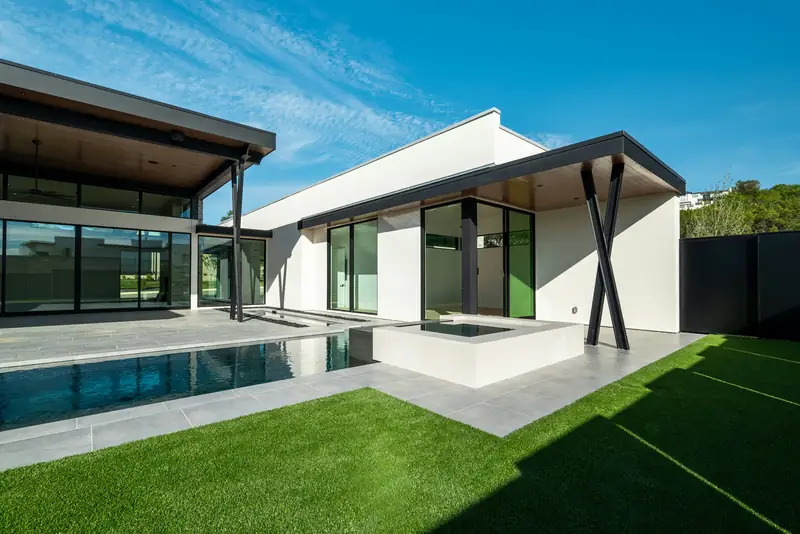
Pool Deck Pavers · Winter Park, FL
Pool Deck Pavers for Winter Park Backyards
As of October 2026, laying pavers around a Winter Park pool, fresh or as an overlay on an older deck, falls in the $12–$30 sq ft installed market range. On the city's older, canopy-shaded lots, a landmark-sized live oak near the cage usually drives the layout more than the price does.
By the Opera Concrete & Pavers estimating team · Updated October 1, 2026
Get a free estimate
Tell us about the project and we'll call to set up a free site visit.
An overlay keeps the footprint, and the coverage math, unchanged
Laying pavers over an existing concrete pool deck, rather than tearing it out, keeps the hard-surface footprint the same, which matters directly under section 58-65's citywide 50 percent impervious cap (City of Winter Park, Sec. 58-65 R-1A districts). The overlay still goes through the same building-permit review the city applies to any hard-surface deck (City of Winter Park, Do I Need a Permit), so skipping the permit because the slab underneath is already there isn't an option the city recognizes.
Grading a Paver Deck to the Drains, Not Just Away From the House
Like any pool deck, a paver field around the water needs to shed rain toward deck drains or a perimeter channel instead of back into the pool, on top of the ordinary slope away from the house any patio needs. We build that grade into the compacted base itself, shaping it before the bedding sand goes down, since correcting a pitch problem after pavers are laid means pulling up a section rather than adjusting a sand layer. On a Winter Park deck, getting that two-direction slope right in the base is what keeps a hard afternoon rain from pushing pollen and yard debris straight into the pool.
A landmark oak near the pool cage changes the paver layout
A live oak measuring 30 inches or more in diameter, in fair to excellent condition, is a landmark tree under the city's 2024 ordinance, a step up from the ordinary six-inch protected threshold (City of Winter Park Ordinance 3320-24). Where one of those sits close enough to a pool cage to shade the deck, which is common on Winter Park's older, mature-canopy lots, the paver pattern and the equipment path for the install both route around its root zone, and the permit's required site plan has to show that relationship before the job is approved.
The Coping Joint Needs a Sealant, Not Just Sand
Where the field pavers meet mortar-set coping at the pool's edge, a standard sand joint isn't the right detail, since the two systems move independently and a rigid mortar line right there cracks the same way a concrete deck would without an isolation joint. We detail that transition with a flexible sealant over a backer rod instead, the same approach a poured concrete deck uses at its own coping line. On a Winter Park paver deck, butting sand-set pavers straight against mortar-set coping without that flexible joint is one of the more common reasons the first paver course against the pool starts rocking within a year or two.
A travertine overlay near a protected oak, worked out in square feet
Picture a 450 square foot original cool-deck patio on an older Winter Park lot, with a landmark-sized live oak shading roughly a third of it. Resetting that area in travertine instead of a plain resurfacing, at $12–$30 per sq ft installed, puts the job somewhere around $5,400 to $13,500 before the site plan accounts for whatever extra care the root zone needs during the install.
The Final Walk: Checking Drains, the Coping Joint and Every Loose Paver
With joints swept and compacted, we walk the finished deck checking every deck drain for flow, running a hose along the coping to confirm the flexible sealant joint is sealed end to end, and resetting any paver that rocks or sits proud in its sand bed before calling the job finished. On a Winter Park deck, this final check with water running catches a slope problem a dry walk-through would miss entirely, since a flat or slightly misgraded section doesn't always look wrong until water is moving across it. Cleanup includes clearing excess joint sand off the coping and out of the pool if any blew in.
Slick Travertine and Algae Where the Deck Stays Wettest
Honed or polished travertine already has less texture than a textured concrete paver, and in the section of deck closest to the water, or any shaded stretch under a lanai roof, that smoother surface combined with algae film is where slip incidents on a pool deck tend to happen. A Winter Park homeowner choosing a very smooth travertine finish for its look should weigh that against the splash zone's slip risk specifically, since a textured or tumbled finish holds up better underfoot in exactly the spot that stays wet longest. Regular cleaning reduces the algae side of that risk but doesn't change how slick polished stone gets when wet.
A Seasonal Rinse Timed Before the Rainy Season Starts
A broader rinse and sweep of the whole paver deck a few times a year, timed ahead of the rainy season that typically runs from late May into October in this part of Florida, clears pollen and leaf litter before it works into joints near the deck drains and slows how fast water moves off the surface. On a Winter Park deck, this routine rinse matters as much for keeping the drains themselves clear as it does for the paver joints, since debris collecting right at a drain inlet defeats the two-direction slope the base was built with in the first place.
Frequently asked questions
Can pavers go over an existing Winter Park pool deck without changing the coverage math?
Yes, an overlay on the existing footprint doesn't add new impervious square footage, which helps on a lot already close to the city's 50 percent coverage ceiling, though the overlay still needs its own building permit.
Does a shade tree near the pool deck need special handling in Winter Park?
If it measures 30 inches or more in diameter and is a live oak or bald cypress in fair to excellent condition, it's a landmark tree under the 2024 ordinance, and the permit's site plan has to show the deck work relative to its root zone.
Is an overlay cheaper than tearing out and replacing a pool deck in Winter Park?
Generally yes, since it skips demolition and disposal costs, though an overlay only makes sense if the slab underneath hasn't settled or cracked badly enough to need a full tear-out first.
Sources
- City of Winter Park — Do I Need a Permit
- City of Winter Park — Sec. 58-65 R-1A districts
- City of Winter Park — Driveway Permit Requirements
- City of Winter Park — Setback/Coverage Worksheet
- City of Winter Park — Right of Way FAQ
- City of Winter Park Ordinance 3320-24 (tree preservation)
- City of Winter Park, Tree Removal Permit Application
- SJRWMD Watering Restrictions
- F.S. 720.3045 (2026) Installation, display, and storage of items
- Florida Statutes §125.572 — synthetic turf on single-family lots
- Florida Administrative Code — Rule 62-308.100, Synthetic Turf (effective May 19, 2026)
- Census Reporter, Winter Park, FL (ACS 2024 5-yr)
- Census Reporter API, Winter Park median year structure built (B25035)
- City of Winter Park, Street Brick Policy
Ready for a price on your project?
Request a free estimate
Tell us about the project and we'll call to set up a free site visit.