
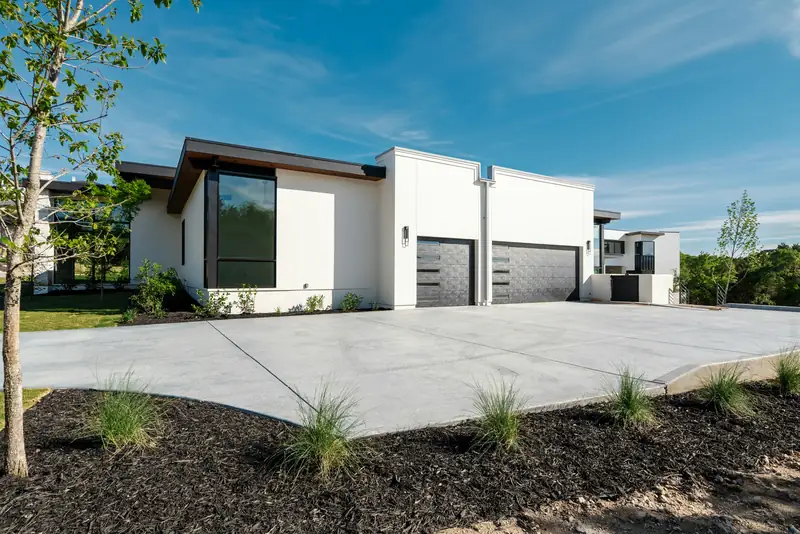
Concrete Driveways · Palmetto, FL
Concrete Driveway Installation in Palmetto
A new or replacement concrete driveway in Palmetto runs $6–$15 per sq ft installed, a range that held through October 2026. The apron where it meets the street is the only part the city regulates directly, under a right-of-way permit that has to be filed before the old concrete comes out.
By the Opera Concrete & Pavers estimating team · Updated October 1, 2026
Get a free estimate
Tell us about the project and we'll call to set up a free site visit.
One permit for the street, none published for the rest
Pulling out and repouring a Palmetto driveway apron is covered by Code Sec. 25-2, which bars a contractor from working in the right-of-way "unless application shall first be made to and a written permit obtained from the department of public works" Palmetto Code Sec. 25-2. The Right-of-Way Use Permit itself sets the clock: 48 hours' notice before the crew shows up, a start within 60 days of approval, and the job wrapped within 30 days, with Public Works doing the final look before it's closed Palmetto Right-of-Way Use Permit. The driveway section between the sidewalk and the garage sits outside that rule, and the Building Department's page doesn't publish a separate threshold for it, so we confirm scope with a phone call rather than assume the private portion is exempt Palmetto Building Department.
Planning the base for Palmetto's flatwoods subgrade
Immokalee fine sand, mapped widely across the city, is poorly drained, carrying a seasonal high water table 6 to 18 inches down for one to four months most years and 18 to 42 inches down for longer stretches NRCS Immokalee soil series. Florida's residential code allows up to 24 inches of clean sand or gravel fill, or 8 inches of ordinary earth, before an engineer has to sign off, with a 4-inch compacted base required under the slab regardless. On a driveway built for a work truck or a boat trailer rather than a sedan, that wet subgrade is the detail that decides how deep the base goes, not the finished square footage.
Working a Driveway Around a Protected Oak's Roots
Live oak roots can run well past the canopy and lift a slab years after it was poured. Orlando and Winter Park both protect trees at 6 inches in diameter at breast height by ordinance, and removing or cutting into the root zone of a protected tree needs a permit, not just a shovel. When we find roots in the base of a Palmetto driveway, we route the subgrade around them, or bridge over them with extra fill and reinforcement, instead of cutting whatever is in the way. Whether a protection ordinance applies depends on Palmetto's own code, so it is worth checking before the first scoop of dirt moves.
What Actually Happens Before the Concrete Truck Arrives
Forming and grading come before anything gets poured. We set the forms to the final layout, grade and compact the subgrade, and if Palmetto requires a permit for the work, the inspector typically needs to see the forms and base before concrete covers them up. Only after that review, where one applies, do we schedule the truck. Skipping straight to a pour date without this sequence is how a driveway ends up with a base nobody checked, which is the most common point where later problems start. The forming and grading day usually takes longer than the pour itself.
Say a 22 x 24 ft two-car driveway in an older downtown Palmetto neighborhood needs a full tear-out, 528 sq ft total
Say a 22 x 24 ft two-car driveway in an older downtown Palmetto neighborhood needs a full tear-out, 528 sq ft total. At $6–$15 per sq ft, that spans $3,168 to $7,920 across the full range, narrowing to roughly $4,224 to $6,336 inside the typical $8–$12 band. The private slab is priced the same whether or not the apron gets touched, but once the apron at the street is part of the job, the right-of-way permit has to be filed and the 48-hour notice given before the old concrete comes out, something a driveway set back entirely on private ground skips.
Choosing a Finish Before the Truck Shows Up
A broom finish is the plain, standard surface most driveways get: a broom is dragged across the concrete while it is still workable, leaving a texture that sheds water and resists slipping. Exposed aggregate goes a step further, washing or blasting the surface cement off so the stone inside the mix shows through, which changes both the look and the grip underfoot. Both sit within the basic tier of finish work, well short of stamped or multi-color decorative treatments. The choice has to be made before the pour starts in Palmetto, since a broom finish cannot become exposed aggregate after the fact without resurfacing.
A Driveway Can Lift Years After the Tree Was Already There
Live oak roots keep growing long after a driveway is poured, and a root that was not a problem at install can lift a slab edge five or ten years later. Orlando, Winter Park and Sarasota all protect larger trees by ordinance, and cutting into a protected root system without a permit can be a code violation even if the tree itself looks like it is just dropping leaves on the driveway. A Palmetto homeowner who notices a slab edge starting to tent near a mature tree is better off checking the local tree ordinance before calling anyone with a saw, since the fix has to account for the tree's status, not just the concrete.
A Driveway on Flatwoods Soil Needs Drainage Checked Every Wet Season
Flatwoods soils like Myakka and Smyrna hold water close to the surface for months at a stretch during the wetter part of the year, which means a driveway built on that kind of lot depends on its original grading continuing to shed water the way it was designed to. Mulch beds, new landscaping or a few years of settling can quietly change how water moves across a Palmetto yard and start directing runoff back toward the slab instead of away from it. Checking that the grading still slopes the right way each time the yard changes is cheap insurance against the kind of slow saturation that got the base into trouble in the first place.
Frequently asked questions
Do I need a city permit to replace my Palmetto driveway?
The apron in the right-of-way does, under Code Sec. 25-2, with Public Works requiring 48 hours' notice before work starts. The city's published rules are silent on the private section of the driveway, so we call the Building Department to confirm scope before pricing a job.
How fast does a Palmetto right-of-way permit have to move once it's issued?
The permit requires work to start within 60 days of issuance and finish within 30 days once it begins, with a final Public Works inspection closing it out and the restored section matching city standards.
Does Palmetto's soil affect how deep a driveway base goes?
Often, yes. Immokalee soil, common under Palmetto lots, holds a seasonal high water table within 18 inches of the surface for part of the year, which changes the fill and base plan for a driveway built to carry heavier loads.
Sources
- Palmetto Code §25-2 Permit required for use of street or ROW
- Palmetto Right of Way Use Application/Permit (rev. 2019)
- Palmetto Building Department
- Palmetto Code §10-46 Seawall/retaining wall permit required
- Palmetto Code §29-207 Stormwater fee
- Manatee County - Modified Phase III water shortage restrictions
- SWFWMD District Water Restrictions
- FEMA - Features of Flood Insurance Rate Maps in Coastal Areas
- FDOT Structures Design Guidelines Vol. 1, §1.3.2 environmental classification
- NRCS OSD Immokalee
- NRCS OSD EauGallie
- NRCS OSD Felda
- Florida Administrative Code — Rule 62-308.100, Synthetic Turf (effective May 19, 2026)
- Florida Statutes §125.572 — synthetic turf on single-family lots
- F.S. 720.3045 (2026) Installation, display, and storage of items
- NWS Tampa Bay Thunderstorm Climatology Quick Reference
- Census Reporter, Palmetto FL (ACS 2020-2024 5-yr, B01003/B25035)
- Wikipedia, Palmetto, Florida
- Wikipedia, Snead Island
Ready for a price on your project?
Request a free estimate
Tell us about the project and we'll call to set up a free site visit.