
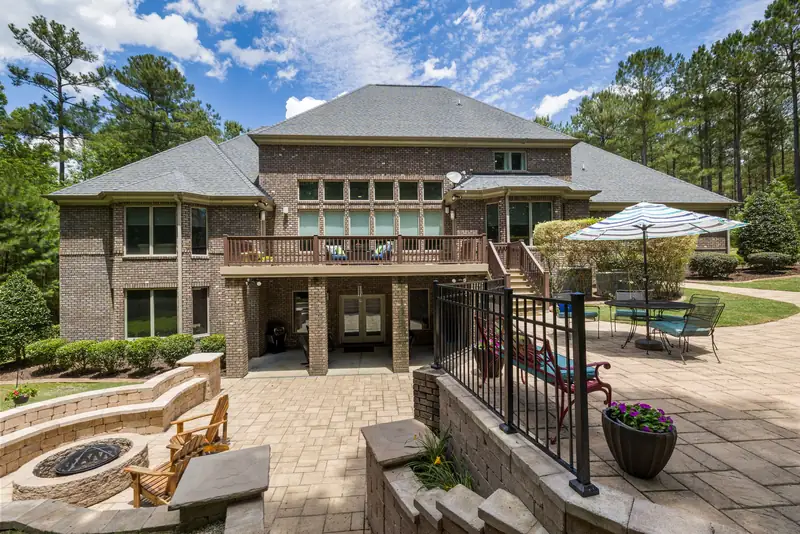
Paver Patios & Walkways · Maitland, FL
Paver Patios and Walkways for a Maitland Home
A paver patio or walkway in Maitland runs $10–$17 per sq ft installed as of October 2026. A patio on private property fits inside the same 70 percent coverage math as the rest of the lot, while a front walkway that steps into the right-of-way needs its own Paver Letter on file first.
By the Opera Concrete & Pavers estimating team · Updated October 1, 2026
Get a free estimate
Tell us about the project and we'll call to set up a free site visit.
A paver walkway and patio combination near a Maitland lake, worked out in square feet
Consider a Maitland home near one of the city's smaller lakes relaying a 3-foot-wide, 25-foot front walkway, 75 square feet, that crosses into the right-of-way strip, plus a 200 square foot paver patio off the back porch. At $10–$17 per sq ft installed for the combined 275 square feet, that runs roughly $2,750 to $4,400, with the front walkway's Paver Letter filed before the crew starts on the right-of-way section.
The right-of-way portion of a walkway carries its own paperwork
Where a paver walkway extends from the porch into the strip the city maintains near the street, Maitland requires a Paver Letter submitted with the permit application, separate from the standard driveway or right-of-way review (City of Maitland, Permitting Information). A patio that stays entirely on private property doesn't trigger that extra document, but the front few feet of a long walkway often do.
Travertine pavers versus concrete pavers for a patio
Travertine and concrete pavers solve the same problem with different materials. Travertine is a natural stone that stays noticeably cooler underfoot in direct sun than a dark concrete paver, which matters on an uncovered Maitland patio in summer, though we won't put a number on the temperature difference since no verified measurement exists for Florida conditions. It's also more porous, so sealing matters more over time. Market ranges for installed paver patios run about $10 to $17 per square foot, and travertine typically prices above the top of that range because of material cost. Concrete pavers come in more colors and patterns and cost less to replace if one cracks.
Seventy percent of the lot covers the patio too
Maitland's single-family zoning code counts a paver patio toward the same 70 percent impervious ceiling that applies to the driveway, pool and house (City of Maitland LDC, Art. 3 Zone Districts). On a lakefront lot near Lake Sybelia or one of Maitland's other 20 named lakes, that math is worth running before a patio is extended toward the water, since shoreline setbacks add another layer on top of the coverage limit.
Flatwoods soil and why the base sometimes gets thicker
A lot of the territory we work in sits on flatwoods soils such as Myakka, Florida's official state soil, where a seasonal high water table can sit within 18 inches of the surface for part of the year. ICPI's guidance is direct about what that means for a paver base: continually wet or weak soil needs a base 2 to 4 inches thicker than the standard patio or walkway depth. On a Maitland lot with poor natural drainage, that extra aggregate, plus a perforated drain pipe where the soil stays saturated, does more for the long-term flatness of the patio than any amount of extra paver thickness would.
Settling versus a sinkhole: telling the difference
A sunken corner of a patio unsettles people faster than it should, and in the vast majority of cases it's ordinary settling, not a sinkhole. True ground-cover collapse is a sudden, dramatic event tied to structural damage, while a paver patio dishing an inch over a year is almost always a base that lost compaction or washed out at an edge. Even counties on the state's higher sinkhole-claim list see settling far more often than an actual collapse, and counties like Sarasota and Manatee aren't on that list at all. A Maitland homeowner with a low spot should expect a base repair, not a geological survey.
The last day: inspection, cleanup and the final walk
If the jurisdiction reviewing the job requires a permit or inspection for the patio, that typically happens after base compaction and before pavers are set, so the base stays visible for the inspector. Once joints are swept and compacted, we do a final walk across the whole surface checking for any paver that rocks or sits proud, resetting it in its sand bed before calling the job finished rather than after. On a Maitland patio, cleanup also means clearing excess joint sand and any base material off adjacent grass or planting beds, since leftover aggregate smothers turf within a couple of weeks.
Re-sanding paver joints before they open up
Joint sand works its way out over time through rain, foot traffic and the odd ant colony excavating a channel, and once it drops much below the top of the paver, the units can rock and the joint edges start to chip. Topping off joint sand and compacting it back in is routine upkeep, not a repair, and catching it before the joints are visibly open is what keeps it that way. On a well-used Maitland patio we'd expect this every couple of years, sooner in high-traffic zones near a door or a grill than in a quiet corner.
Frequently asked questions
Does every Maitland paver walkway need a Paver Letter?
Only the portion that extends into the city's right-of-way strip near the street. A walkway or patio that stays fully on private property doesn't trigger that requirement.
Does a patio count toward Maitland's 70 percent coverage cap?
Yes, a patio is weighed against the same lot-wide impervious ceiling as the driveway, pool and house in all three of the city's single-family zoning districts.
Are there extra rules for a patio near one of Maitland's lakes?
The coverage cap applies the same way regardless of lot location, but a patio extended toward open water is also worth checking against the state's shoreline setback rules that govern features like artificial turf.
Sources
- City of Maitland, Permitting Information
- City of Maitland, Building and Permitting Fees
- City of Maitland Land Development Code, Art. 3 Zone Districts (via Municode)
- Wikipedia, Maitland Art Center
- Orange County Water Atlas, Lake Sybelia
- Census Reporter, Maitland, FL
- Census Reporter API, Maitland median year structure built (B25035)
- SJRWMD Watering Restrictions
- Florida Administrative Code — Rule 62-308.100, Synthetic Turf (effective May 19, 2026)
- Florida Statutes §125.572 — synthetic turf on single-family lots
- F.S. 720.3045 (2026) Installation, display, and storage of items
- USGS WRI 03-4257, Hydrogeology and Quality of Ground Water in Orange County, Florida
Ready for a price on your project?
Request a free estimate
Tell us about the project and we'll call to set up a free site visit.