
Travertine Pool Deck Care in Florida: Cleaning, Sealing and Filling Holes
Travertine pool decks in Greater Orlando and Sarasota–Manatee hold up well to Florida sun, but the stone is porous enough that most guidance points to resealing roughly every 2 to 3 years, sooner right at the coping. As of October 2026, a pH-neutral cleaner and a penetrating sealer, not a filled hole, are what keep a travertine deck looking like new.
By the Opera Concrete & Pavers estimating team · Updated October 1, 2026
How Do You Clean a Travertine Pool Deck Without Damaging It?
Scrub with a pH-neutral cleaner made for natural stone, never an acidic one, since acid etches travertine's surface and dulls its natural finish permanently rather than just discoloring it (A&E Outdoor Living, travertine sealing and maintenance). That one rule covers most of what trips homeowners up: muriatic acid, vinegar and most rust or efflorescence removers are acidic and belong nowhere near unsealed or sealed travertine. Travertine pool decks are more porous than concrete pavers, which is exactly why they feel cooler underfoot in Florida sun, but that same porosity means cleaning and sealing matters more here than on almost any other surface we build.
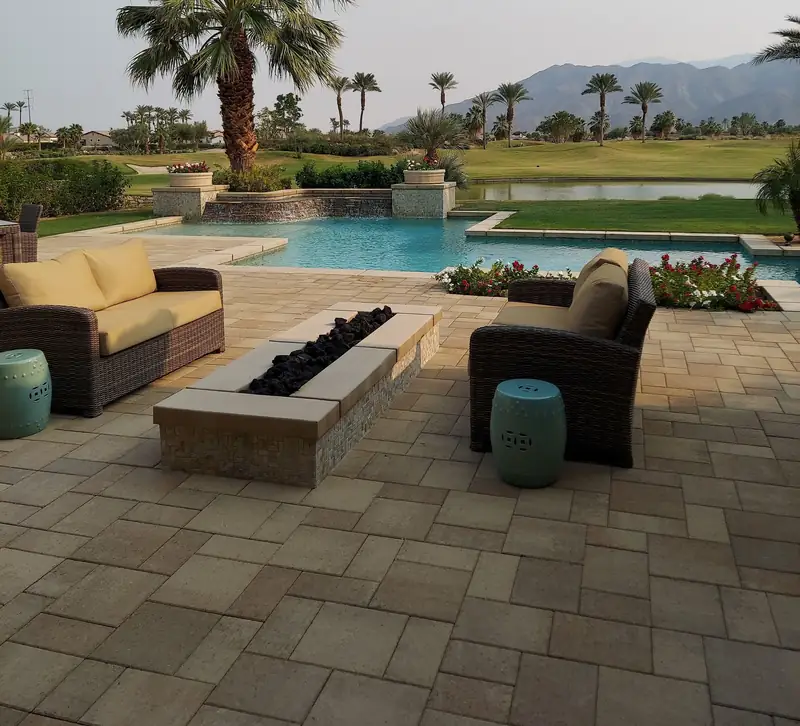
How Often Should You Seal Travertine Around a Pool?
General industry guidance points to roughly every 2 to 3 years for a penetrating sealer on travertine, sooner at the coping and the first few paver courses closest to the water, where splash-out, chlorine and sunscreen concentrate (A&E Outdoor Living). That's a general guideline rather than a fixed rule written into any paver spec, so watching the stone itself, water that no longer beads, a color gone flat in the splash zone specifically, is still the better signal than counting years on a calendar. A penetrating sealer made for natural stone and wet environments is the right product here, since it soaks into travertine's pores rather than forming a surface film the way some paver sealers do, which keeps the deck from going slicker than it already can be when wet.
Should You Fill Holes and Pits in Travertine?
Travertine forms with small natural voids, and while it's technically possible to fill them, most stone contractors advise against it for an outdoor deck: fillers weather differently than the surrounding stone in sun, pool water and rain, so a patched hole often discolors or stands out more than the hole itself did (Perfect Paver Co., filling holes in outdoor travertine). Filling can also smooth over the texture that gives travertine its grip underfoot, trading a cosmetic fix for a slicker, less safe surface right around a pool. The better approach for most homes is routine cleaning and a proper penetrating sealer, which keeps the natural texture and slip resistance intact rather than patching individual pits.
How Do You Handle Salt, Chlorine and Sunscreen Residue?
Rinse the coping and the nearest paver courses more often than the rest of the deck, since that's where chlorine splash, sunscreen oils and, on a saltwater pool, salt residue concentrate and build toward staining faster than anywhere else on the field. A sealed surface resists that buildup far better than bare travertine does, which is one more reason the sealing schedule near the water matters more than it does farther out on the deck. Coastal salt air adds its own wrinkle for Sarasota and Manatee homes specifically; our guide to saltwater pools and salt air goes deeper into that condition than this everyday-care page does.
Travertine Pool Deck Issues at a Glance
| What you see | Likely cause | What to do |
|---|---|---|
| Small natural pits or holes | Normal voids in the stone | Clean and reseal rather than fill; filling often discolors or dulls texture |
| Dull color, water no longer beads | Penetrating sealer has worn through | Reseal with a stone-safe penetrating product |
| Whitish haze or dusty residue | Hard-water or mineral deposits, or early efflorescence | Rinse with a pH-neutral cleaner; see the white haze on new pavers and concrete |
| Dark spots or greenish film, worse in shade | Mold and algae from standing moisture | See black mold and algae on pavers |
| Etched, dull patch after cleaning | An acidic cleaner was used on the stone | Avoid acid going forward; the etched area may need a professional honing pass |
A Routine Travertine Care Schedule
- Rinse weekly, more often near the water. A hose-down clears sunscreen, chlorine splash and dust before it has a chance to settle into the stone's pores.
- Deep clean a few times a year with a pH-neutral cleaner. Work it into the surface with a soft brush, concentrating on the coping and first few courses closest to the pool.
- Check for dullness or water that no longer beads every season. That's the practical signal a reseal is due, more reliable than counting years.
- Reseal with a penetrating, stone-safe product. Apply once the surface is fully dry, in the coats the manufacturer's label calls for.
- Leave holes and small pits alone. Clean and seal around them rather than filling, unless a pit has grown large enough to be a tripping or structural concern worth a professional look.
How Is Caring for Travertine Different From Caring for Concrete Pavers?
Concrete pavers can usually take a slightly firmer cleaning approach and a wider range of sealer types, while travertine's porosity and natural texture call for the gentler, pH-neutral routine above and a penetrating rather than film-forming sealer specifically. Our travertine vs. concrete pavers comparison covers the upfront trade-offs between the two materials, and our general paver cleaning guide covers the pressure-washing basics that still apply, just at the lower end of the pressure range on travertine specifically.
Frequently asked questions
Can you pressure wash a travertine pool deck?
Yes, but at lower pressure than concrete pavers tolerate, since travertine is softer and more porous. Keep the nozzle wide and the pressure modest, and test an inconspicuous area first; the same low-pressure, wide-nozzle approach used for cleaning pavers generally applies, just with less margin for error on natural stone.
Does travertine need to be sealed every year?
No single interval is written into any paver or stone industry spec, but general guidance for a penetrating sealer on travertine points to roughly every 2 to 3 years, sooner right at the coping and splash zone. Watching the stone for dull color or water that stops beading is a better signal than a fixed yearly schedule.
Why are there small holes in my travertine pavers?
Travertine is a natural stone that forms with voids from gas bubbles trapped as it formed, so small pits are normal rather than a defect. Filling them for an outdoor deck is usually not recommended, since fillers weather differently than the surrounding stone and can discolor or reduce the surface's natural slip resistance.
Can I use bleach on travertine?
It's best avoided. Bleach isn't as aggressive as an acidic cleaner, but it can still lighten or blotch travertine unevenly and isn't needed for routine upkeep; a pH-neutral stone cleaner handles ordinary dirt, sunscreen residue and light staining without that risk.
Does salt from a saltwater pool damage travertine?
A saltwater pool runs far below seawater concentration, but splash-out still deposits salt on the coping and nearby courses as water evaporates, which can show up as a dull residue over time on unsealed stone. Sealed travertine resists that buildup considerably better; our saltwater pools and salt air guide goes further into the coastal-specific side of this.