
What a Concrete or Paver Warranty Should (and Shouldn't) Cover
A concrete or paver warranty should spell out a duration, a specific defect it covers, such as settling beyond a stated threshold or cracking past a stated width, and named exclusions like tree roots and storm damage. As of October 2026, a separate manufacturer warranty on paver units and Florida's Homeowners' Construction Recovery Fund offer additional, narrower protection alongside it.
By the Opera Concrete & Pavers estimating team · Updated October 1, 2026
What Should a Concrete or Paver Warranty Actually Cover?
A written warranty on concrete or paver work should cover installation defects, not the material itself and not ordinary wear. That usually means settling or sinking traced back to the base, edge separation on a paver field, and cracking in concrete beyond a stated width threshold. What it typically excludes matters just as much: tree root damage, storm and flood events, heavy vehicle loads the job wasn't built for, and skipped maintenance like sealing. Getting both halves, what's in and what's out, spelled out in writing is the point; a warranty that only promises to "stand behind the work" without defining either side isn't worth much if a dispute comes up later.
What's the Difference Between a Manufacturer Warranty and a Workmanship Warranty?
Two different documents cover two different risks. A manufacturer warranty, where one exists, covers defects in the paver units themselves, color consistency, strength, freeze-thaw performance in climates that see it, and it comes from the paver maker, not the installer. A workmanship warranty is the installer's own promise about how the job was built: base depth, compaction, edge restraint, joint spacing. Industry buyer guides describe a roughly 2 to 3 year workmanship warranty as standard practice among ICPI-certified paver installers, covering settlement, edge failure and jointing failure specifically (HMNDP Landscaping, hardscape contractor vetting guide). Poured concrete generally has no separate "manufacturer" to warranty the slab itself, so the installer's own workmanship warranty is the only document covering the work, which makes its wording worth reading closely rather than assuming it matches a paver job's split.
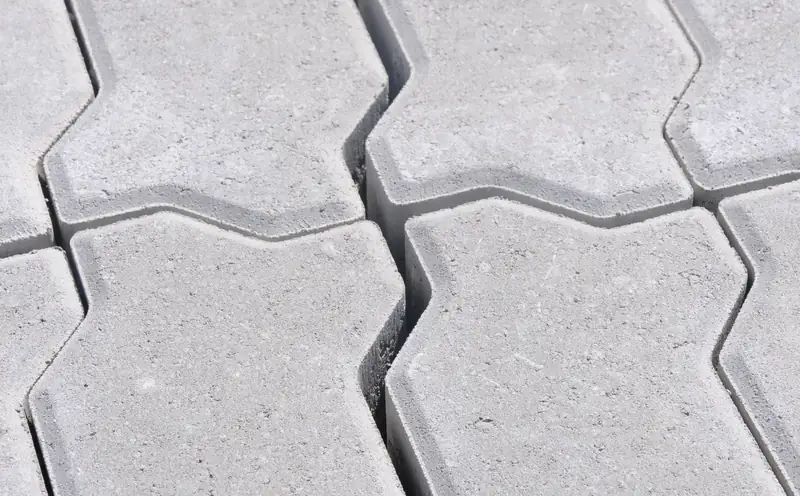
What Does a Paver Warranty Usually Cover, and for How Long?
Settling and sinking tied to the compacted base, rather than to the paver units themselves, sits at the center of most paver workmanship warranties, since a base that was built short of spec is the installer's responsibility to correct. Edge or joint separation, where the restraint holding the field's perimeter fails and pavers start to spread, is the other common item. Asking what happens if a section needs to come up and be re-leveled, rather than just whether it's "covered," clarifies whether the fix is a quick re-level or a bigger tear-out. Our guide to why pavers sink in Florida covers the underlying causes a warranty like this is meant to address.
What Does a Concrete Warranty Usually Cover?
Cracking beyond a stated width, rather than cracking in general, is the more honest way a concrete warranty is usually written, since a slab is engineered to crack at its control joints by design. An example seen on one contractor's published warranty page sets the line at cracks exceeding a quarter inch in width within the first year as the threshold for a covered repair, with ordinary hairline shrinkage cracking excluded (Mattingly Concrete, 1-Year Limited Warranty). Standing water that persists on the surface well past a rain event is another common item, since a slab that wasn't sloped correctly for drainage is a workmanship question, not a maintenance one. Our guide to why concrete driveways crack walks through which cracks are considered normal versus which ones point to an underlying problem.
What Do Written Warranties Typically Exclude?
Acts of nature sit at the top of nearly every warranty's exclusion list: storms, flooding, and earth movement the installer had no control over. Damage traced to tree roots growing into a base after the fact is another common exclusion, since it's a site condition that developed after the work was finished rather than a flaw in how it was built (our guide to tree roots under a driveway covers that specific problem). Heavy or commercial vehicle loads the job wasn't designed for, surface wear like spalling or color fading, and skipped maintenance, a sealer that was never reapplied on the schedule the contract specified, round out the common list. A warranty that names these exclusions explicitly is easier to work with than one that stays vague, since vague language tends to get interpreted against whoever wrote it when a dispute actually happens.
Does Florida Law Offer Any Protection Beyond a Contractor's Own Warranty?
Yes, but it depends on licensing status. The state's Homeowners' Construction Recovery Fund can reimburse a homeowner for certain losses caused by specified violations, but only when the contractor responsible held a valid license for the scope of work at the time (F.S. 489.1425). That's a separate backstop from the contractor's own written warranty, not a substitute for one, and it only exists at all if the business was licensed for a scope that required a license in the first place. Our guide to checking a Florida contractor license covers how to confirm that status before signing.
What Should Be in Writing Before You Sign?
A duration, in years or months rather than "a reasonable time." A crack-width or settlement threshold that triggers a covered repair, rather than a promise to "stand behind the work." A list of what's excluded, named directly instead of left to be argued about later. Whether the warranty transfers to a new owner if the home sells within the coverage window, since that detail affects resale conversations years down the line. And who's actually responsible if part of the job was subcontracted, the general contractor named on the bid or the subcontractor who physically did the work. Our guide to comparing concrete and paver quotes covers how warranty language fits alongside the rest of a written bid.
Say You're Comparing Warranty Language on Two Paver Patio Bids in Parrish
A homeowner in Parrish reading two paver patio bids side by side notices that one spells out a 2 year workmanship warranty covering settlement and edge separation, with tree root damage and storm events named as exclusions, while the other simply states the work is "guaranteed" with no duration or scope attached. The second bid isn't necessarily a worse job, but the vague language means there's nothing to point to if a section settles 18 months in, which is reason enough to ask for the same specificity the first bid already provides before signing either one.
Frequently asked questions
How long should a paver workmanship warranty last?
Industry buyer guides describe roughly 2 to 3 years as standard practice among ICPI-certified installers, covering settlement, edge failure and joint separation specifically. Shorter or longer terms both exist in practice; the more important question is whether the warranty names a specific duration and specific covered items rather than a vague promise.
Does a concrete warranty cover all cracking?
Usually not, and it shouldn't, since a slab is designed to crack at its control joints. Written warranties more often set a width threshold, such as cracks exceeding a quarter inch within the first year, as the trigger for a covered repair, with ordinary hairline shrinkage cracking excluded from coverage.
Is a paver warranty the same as the manufacturer's warranty?
No. A manufacturer warranty, where one exists, covers defects in the paver units themselves. A separate workmanship warranty from the installer covers how the job was built: base depth, compaction and edge restraint. Asking for both documents in writing avoids assuming one covers what the other doesn't.
What does the Florida Homeowners' Construction Recovery Fund cover?
It can reimburse a homeowner for certain losses caused by specified violations, but only when the responsible contractor held a valid license for that scope of work. It's a backstop separate from a contractor's own written warranty, not a replacement for getting warranty terms in writing.
Do warranties cover damage from tree roots?
Typically not. Tree root damage that develops after installation is a common exclusion in both concrete and paver warranties, since it's treated as a site condition rather than a flaw in the original work. A root barrier installed up front is a prevention question, not a warranty one.