
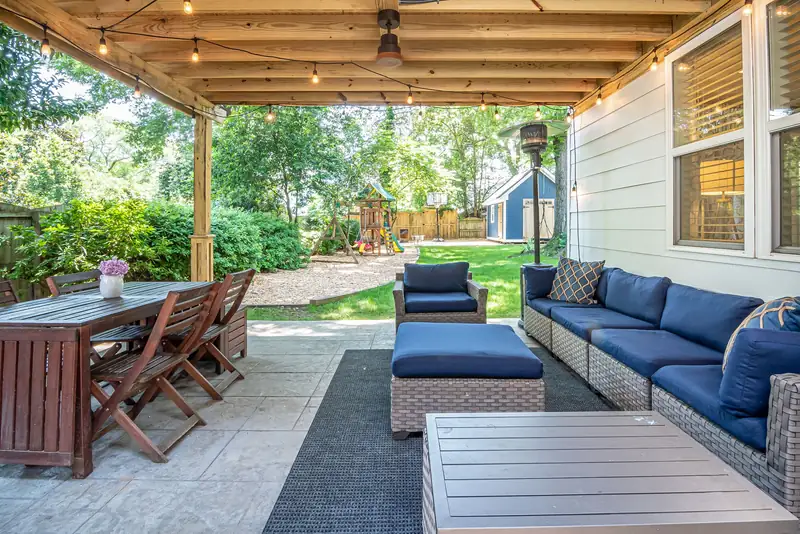
Paver Patios & Walkways · Avalon Park, FL
Paver Patios and Walkways for an Avalon Park Home
A paver patio or walkway in Avalon Park runs $10–$17 per sq ft installed as of October 2026. Orange County reviews pavers through a zoning permit rather than the fuller building-permit path a poured slab gets, though the same open-space math applies to either one.
By the Opera Concrete & Pavers estimating team · Updated October 1, 2026
Get a free estimate
Tell us about the project and we'll call to set up a free site visit.
A lighter review, with its own paperwork
Orange County's rule is specific: "pavers require a zoning permit only," filed with a dimensioned site plan showing property lines, easements and the paver's location, plus a flat $38 permit fee and a $38 development-engineering review fee (Orange County, Residential Pavers). A paver patio that sits inside a recorded easement needs an easement acknowledgement form added to that same submission.
Forty percent open space, county-wide
Orange County's code sets residential private open space at a minimum of 40 percent of the lot (Orange County, Residential Pavers), the flip side of the same coverage math other jurisdictions express as a maximum impervious percentage. A paver patio added to a lot that already carries a full driveway and house footprint is weighed against that 40 percent floor before the layout is finalized.
Flatwoods soil and why the base sometimes gets thicker
A lot of the territory we work in sits on flatwoods soils such as Myakka, Florida's official state soil, where a seasonal high water table can sit within 18 inches of the surface for part of the year. ICPI's guidance is direct about what that means for a paver base: continually wet or weak soil needs a base 2 to 4 inches thicker than the standard patio or walkway depth. On a Avalon Park lot with poor natural drainage, that extra aggregate, plus a perforated drain pipe where the soil stays saturated, does more for the long-term flatness of the patio than any amount of extra paver thickness would.
Tying new paver work into an existing slab mid-project
When a patio extends off an existing concrete pad, the saw-cutting and elevation matching happen early, usually on day one, so every later stage, base compaction, sand screeding, paver laying, is built around a confirmed, flush transition rather than guessed at and corrected at the end. We dry-lay a row of pavers against the cut edge before compacting the final base lift, checking the finished height against the old slab with a straightedge. On a Avalon Park addition this extra verification step adds maybe an hour to the job and prevents the far more time-consuming fix of pulling up a finished section later.
A paver patio reviewed under the county's zoning permit, worked out in square feet
Picture an Avalon Park home adding a 15 by 16 foot paver patio, 240 square feet, off the back of the house. At $10–$17 per sq ft installed for that footprint, the job runs roughly $2,400 to $3,840, plus the county's combined $76 in zoning and engineering review fees, filed with a site plan rather than the fuller building-permit package a poured-concrete version of the same patio would need.
Choosing a pattern for a patio instead of a driveway
A paver pattern on a patio does a different job than the same pattern on a driveway. Herringbone resists the shifting caused by turning tires, a force a dining table and a few chairs never apply, so a Avalon Park patio has more room to run a running bond, basketweave or soldier-course border purely for the look homeowners want rather than for load distribution. We still keep cut pavers out of high-wear zones like the path from the back door to the grill, since small cut pieces are the first to work loose regardless of the overall pattern. The edge restraint, not the pattern, carries most of the structural work on a pedestrian surface.
Ants and weeds moving into the joints
Dry joint sand is an easy place for ants to excavate a nest and for windblown weed seed to germinate, especially in joints that were never compacted tight or that have washed thin over time. On a Avalon Park patio in a shaded or irrigated corner, both problems tend to show up together, since loose, damp sand is friendlier to ants and seedlings than sand that's been properly compacted and kept topped off. Re-sanding and compacting the joints removes the loose material both are living in, and it's a maintenance task, not a sign the patio was built wrong, though neglected joints make it worse.
Cleaning mold and algae off a shaded patio
A shaded or damp Avalon Park patio needs more frequent cleaning than one in full sun, since mold and algae regrow fast once conditions favor them. A mild cleaner made for pavers, applied with a stiff brush and rinsed well, handles most of it without disturbing the joint sand the way a close-range pressure washer will. High-pressure washing blasted directly into the joints strips sand out faster than normal weathering does, which trades one maintenance problem for another. Trimming back overhanging branches to let more light and air reach the surface does more for long-term algae control than any cleaner applied after the fact.
Frequently asked questions
Does a paver patio in Avalon Park need a full building permit?
No. Orange County reviews pavers through a zoning permit specifically, a lighter process than the building-permit review a poured concrete patio or slab goes through.
What does Avalon Park's paver permit cost through the county?
Orange County's residential paver permit runs a $38 zoning fee plus a $38 development-engineering review fee, with review typically taking about 4 business days.
Does a patio inside an easement need extra paperwork in Avalon Park?
Yes. Orange County requires an easement acknowledgement form added to the permit application whenever the paver work falls inside a recorded easement.
Sources
- Orange County Government, Avalon Park
- Avalon Park Orlando, About
- Orange County — Do I Need a Permit
- Orange County — Residential Pavers
- Orange County — Residential Lot Grading Policy 2023
- Orange County — A Guide for Residential Plan Approval
- SJRWMD Watering Restrictions
- Florida Administrative Code — Rule 62-308.100, Synthetic Turf (effective May 19, 2026)
- Florida Statutes §125.572 — synthetic turf on single-family lots
- F.S. 720.3045 (2026) Installation, display, and storage of items
- NRCS OSD Smyrna
- NRCS OSD Myakka
Ready for a price on your project?
Request a free estimate
Tell us about the project and we'll call to set up a free site visit.