
Concrete Driveways · Apopka, FL
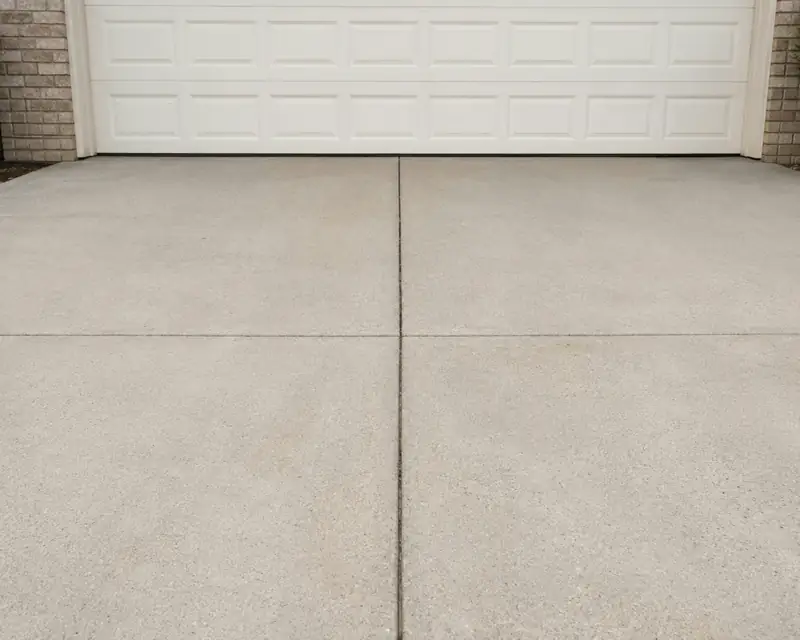
Pouring a Concrete Driveway in Apopka
Pricing for a new or replacement concrete driveway in Apopka sits at $6–$15 per sq ft installed this October 2026, the going Florida market figure. Apopka treats the slab as a structure for permit purposes, so the fee tracks the contract value rather than square footage, and work that widens the apron toward the street adds a second review.
By the Opera Concrete & Pavers estimating team · Updated October 1, 2026
Get a free estimate
Tell us about the project and we'll call to set up a free site visit.
The permit fee scales with the contract, not the slab's size
Apopka's fee schedule sets the formula without exception: "$7.50 per $1,000 of actual contracted cost or construction cost/value, whichever is greater," with a floor of $75 (Apopka Permitting Fees). That means two driveways of the same square footage can carry different permit fees if their finishes, and therefore their contract prices, differ, a detail worth asking a contractor to confirm before the number gets written into a quote for a driveway.
A widened apron adds the Engineering Division to the paperwork
Where a new or wider driveway meets the street, that section falls to the Engineering Division rather than the Building Division alone, since that office covers right-of-way permitting, plan review and drainage review for work in the public strip (Apopka Engineering Division). A driveway that stays inside its existing footprint on private ground skips that second review; one that widens toward the curb typically doesn't.
Ridge Sand Doesn't Behave Like Flatwoods Soil
The sand ridge soils west of Orlando, Candler, Astatula and Tavares, drain almost too well: the water table can sit more than 80 inches down. That sounds like easier ground to build on, but loose, excessively drained sand does not hold a compactor's pass the way a firmer soil does, and it can shift under the plate instead of locking together. On a ridge lot in Apopka, we wet the material enough to bind it, then compact in shallow lifts rather than one deep pass. Skip that step and the driveway can still settle later, just for the opposite reason a flatwoods lot would.
Why the Saw Comes Out Hours, Not Days, After the Pour
Joint cutting happens on a tight clock relative to the pour, not on a separate visit days later. Depending on the saw and the weather, cuts go in anywhere from about 1 hour to about 12 hours after finishing, timed to when the concrete has firmed up enough to cut cleanly without the edge crumbling. On a Apopka job, we track the slab's set time rather than work from a fixed schedule, since a hot, dry afternoon firms concrete up faster than an overcast one. Missing that window in either direction is how a joint ends up ragged or badly placed relative to where the slab actually wants to crack.
Replacing a two-car driveway, worked out in square feet
A 22 by 24 ft two-car driveway comes to 528 sq ft. At $6–$15 per sq ft installed, the pour alone lands between roughly $3,168 and $7,920, before demolition of the old slab is added. Running a $5,500 contract for that job through the city's fee formula puts the permit itself at roughly $75, since $5,500 falls under the $75 floor on the $7.50-per-$1,000 scale; a larger, higher-end contract for the same footprint would push the fee closer to, or past, that floor depending on the finish chosen.
Why an L-Shaped Driveway Panel Is a Problem Before It's Poured
Joint layout is not just about spacing, it is also about shape. Guidance on control joints calls for panels that come out close to square, with the length no more than about one and a half times the width, and specifically warns against L-shaped panels. A driveway in Apopka that wraps around a porch step or a utility pad often tempts a layout with exactly that shape, and an L-shaped section concentrates stress at the inside corner no matter how well the rest of the slab is built. We plan extra joints into that corner at layout time instead of hoping the shape holds on its own.
The Cracking That Starts Before the Slab Even Cures
When the evaporation rate from a fresh slab climbs above roughly 0.2 pounds per square foot per hour, which happens on hot, windy, low-humidity days, the surface can dry out faster than the concrete underneath gains strength. The result is plastic shrinkage cracking: thin, usually parallel cracks spaced a few feet apart that show up within hours of finishing. A Apopka pour on a hot, breezy afternoon is exactly the kind of day this happens on, and once those cracks form they cannot be undone, only patched. Windbreaks, fog sprays and a dampened subgrade all reduce the risk, but only when the crew is watching the conditions, not just the clock.
Telling Normal Cracking From Something Worth a Call
A hairline crack along or near a control joint, especially in a driveway with large panels or a few years on it, is typically ordinary shrinkage and settlement, not a structural problem. What is worth a call is a sudden, visible depression, especially paired with cracking that reaches a structure rather than just the driveway surface, since that combination is closer to what Florida law treats as a catastrophic ground cover collapse. For a Apopka homeowner, the practical rule of thumb is that gradual change over months is normal monitoring, while anything abrupt is worth a quick look rather than waiting for the next routine check.
Frequently asked questions
Is Apopka's driveway permit fee based on square footage?
No. The city calculates it off the contracted cost or construction value, $7.50 per $1,000, with a $75 minimum, so two driveways the same size can carry different fees depending on price.
Does a concrete driveway in Apopka need Engineering Division sign-off?
Only the part that touches the street or city drainage. The Engineering Division reviews right-of-way and drainage work; a driveway staying within its existing private footprint typically stays with the Building Division alone.
Where is Apopka's Building Division located?
City Hall, 120 E Main Street, second floor, reachable at 407-703-1713 for driveway and other structure permits.
Sources
- Census Bureau PEP, City and Town Population Totals, Vintage 2025 (July 1, 2025)
- SJRWMD Watering Restrictions
- Florida Senate Interim Report 2011-104 (sinkhole insurance)
- Florida Administrative Code — Rule 62-308.100, Synthetic Turf (effective May 19, 2026)
- Florida Statutes §125.572 — synthetic turf on single-family lots
- Orange County — A Guide for Residential Plan Approval
- NRCS OSD Candler
- NRCS OSD Tavares
- NRCS OSD Astatula
- NRCS OSD Myakka
- NRCS OSD Smyrna
- City of Apopka, Building Permit FAQs
- City of Apopka, Permitting Fees
- City of Apopka, Engineering Division
- City of Apopka, Permitting
- City of Apopka, Permit Types
- City of Apopka, Apopka Art & Foliage Festival Proclamation
- Census Reporter, Apopka FL (ACS 2020-2024 5-yr, B25035/B01003)
- Wikipedia, Apopka, Florida
- Wikipedia, Wekiwa Springs State Park
- Orange County Parks & Recreation, Kelly Park/Rock Springs
Ready for a price on your project?
Request a free estimate
Tell us about the project and we'll call to set up a free site visit.